- UX Research Leadership
- Customer Insight Strategy
- Voice of Customer
- Journey Mapping
- Insight Governance
TURNING FEEDBACK INTO ENTERPRISE INSIGHTS
Customer feedback existed across product surveys, implementation, training, support, UX research, customer-facing teams, and operational data—but the organization had no shared way to understand it as one enterprise signal. Methods, ownership, and reporting varied, so valuable evidence often remained isolated within the team or tool that collected it.
Working independently over two weeks, I mapped how feedback was collected across an organization spanning seven portfolios and approximately 60 products, then designed a Voice of Customer operating model connecting shared measures, journey touchpoints, ownership, governance, and a future analytics direction. I led the investigation, synthesis, strategy, visualization, and executive readout.
ORGANIZATION
Boeing / Jeppesen / ForeFlight
ROLE
Solo Research & Strategy Lead
DURATION
2 Weeks
SCOPE
7 Portfolios / ~60 Products
STATUS
Proposed / Not Deployed
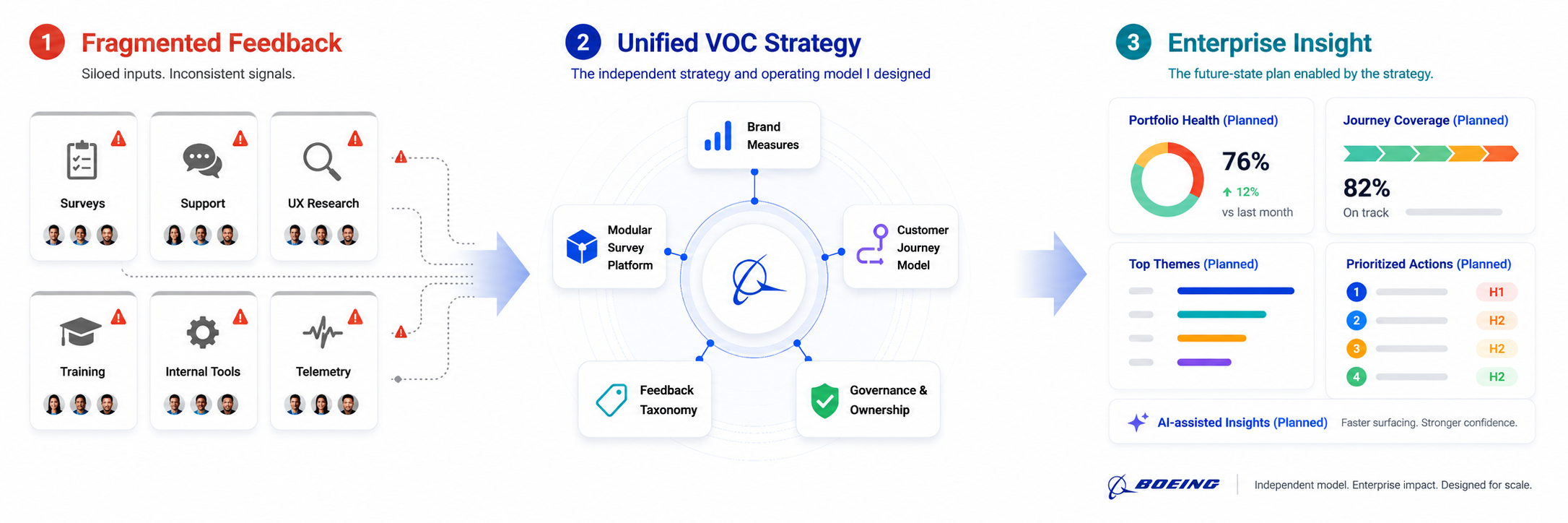
CASE OVERVIEW
I mapped the fragmented listening landscape, defined a unified VOC operating model, and proposed a future analytics direction. Dashboard values shown are illustrative, not measured outcomes.
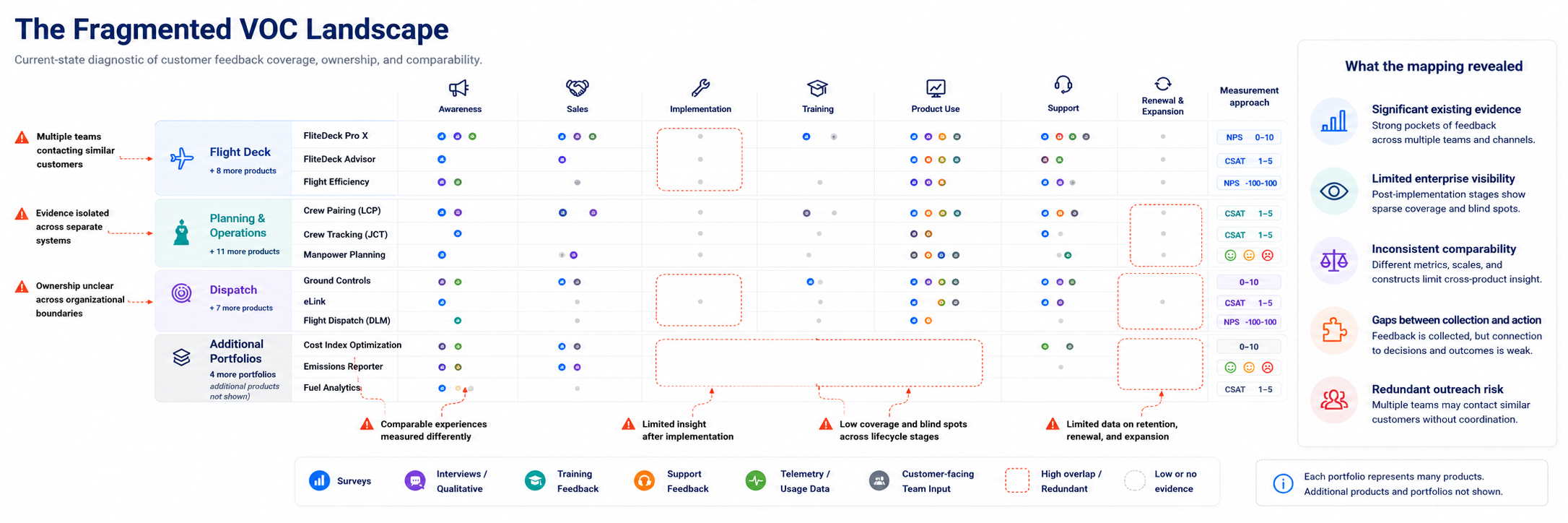
No Shared View of What Customers Were Telling Us
Customer feedback was already being collected across products, portfolios, and customer-facing functions, but survey questions, scales, timing, ownership, storage, and reporting had evolved independently. Leadership could not compare experiences, see where outreach overlapped, identify lifecycle gaps, or determine who was responsible for acting on the evidence.
The consequences appeared in concrete patterns: one customer could be surveyed by three portfolios in the same quarter, lowering response rates for everyone, while a five-response survey could carry the same leadership weight as one with 200 responses. The first task was to make that hidden listening system visible.
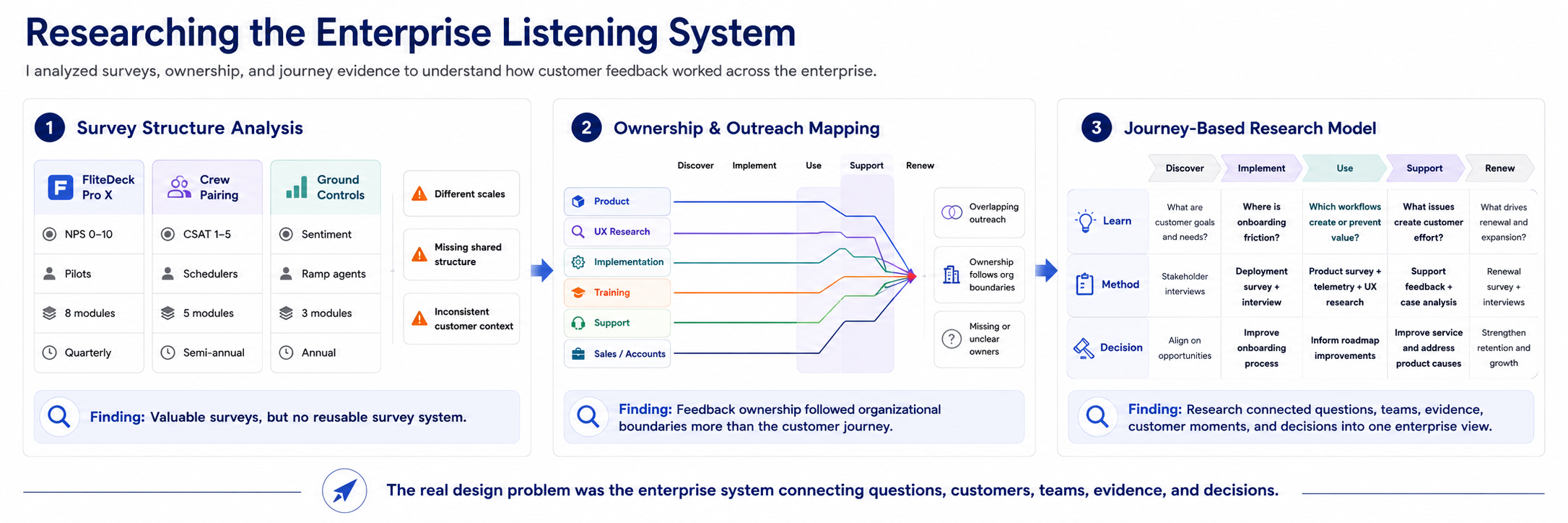
Tracing Feedback From Collection to Decision
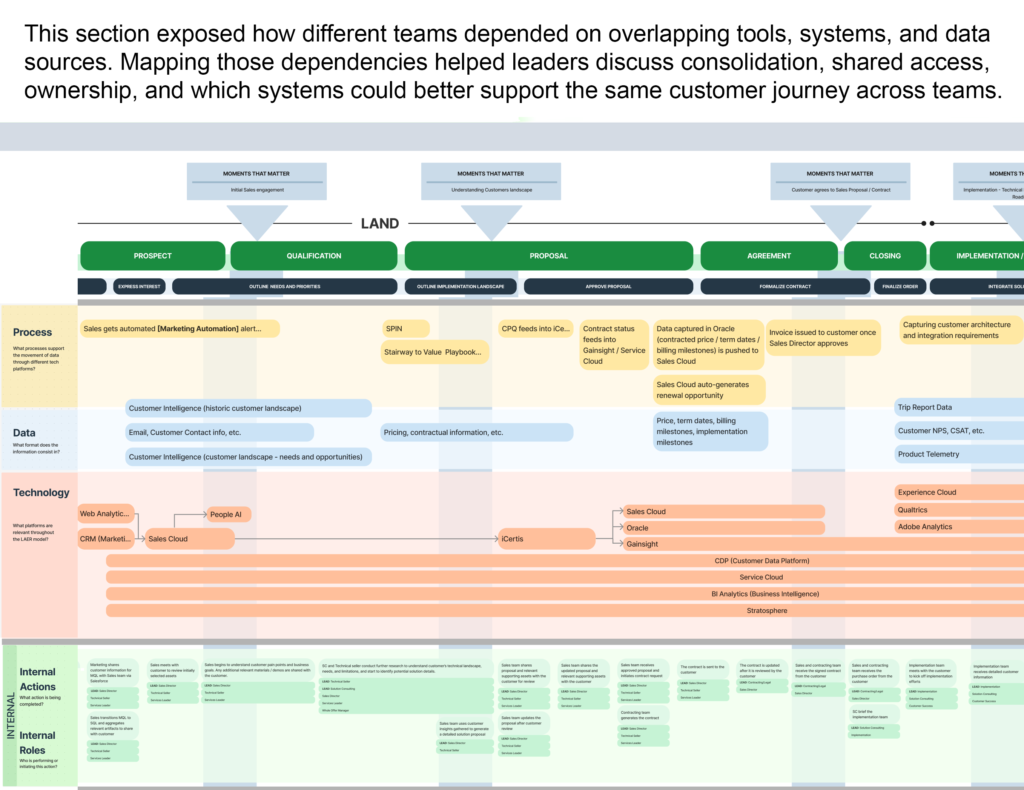
I independently examined how customer feedback operated across the organization. I inventoried survey structures across products and years, compared shared and product-specific questions, identified who owned each activity, and traced where evidence entered—or failed to enter—product and leadership decisions.
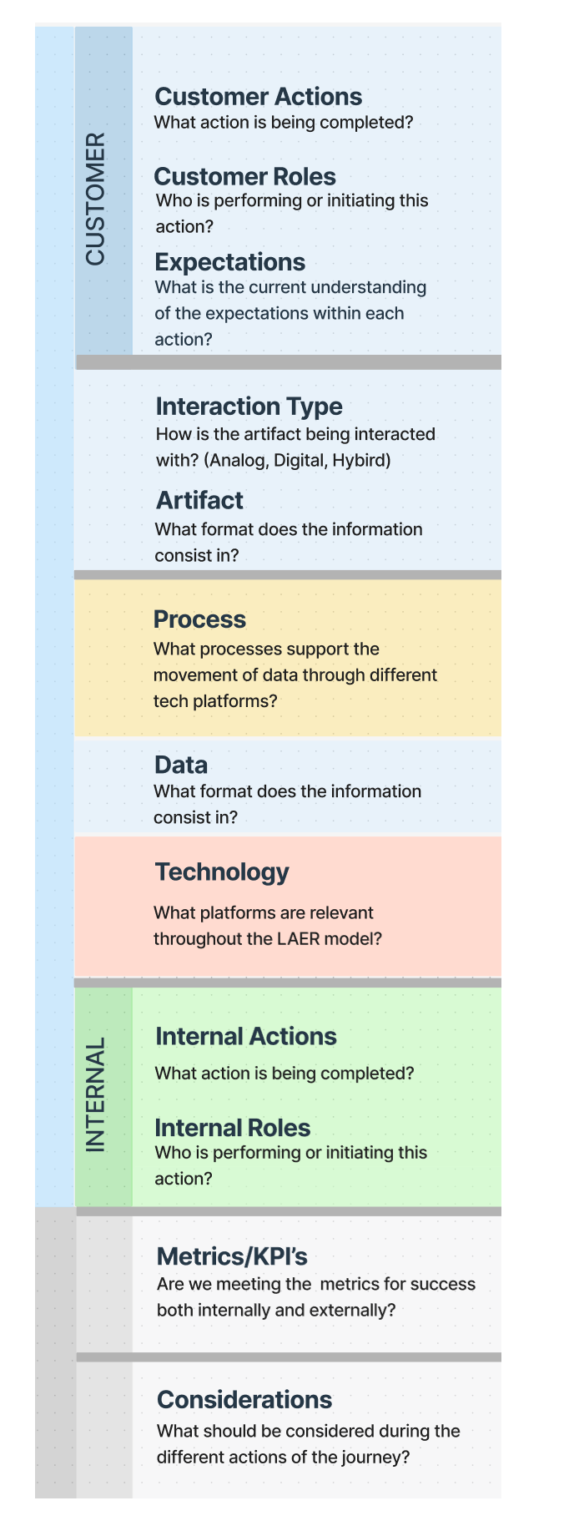
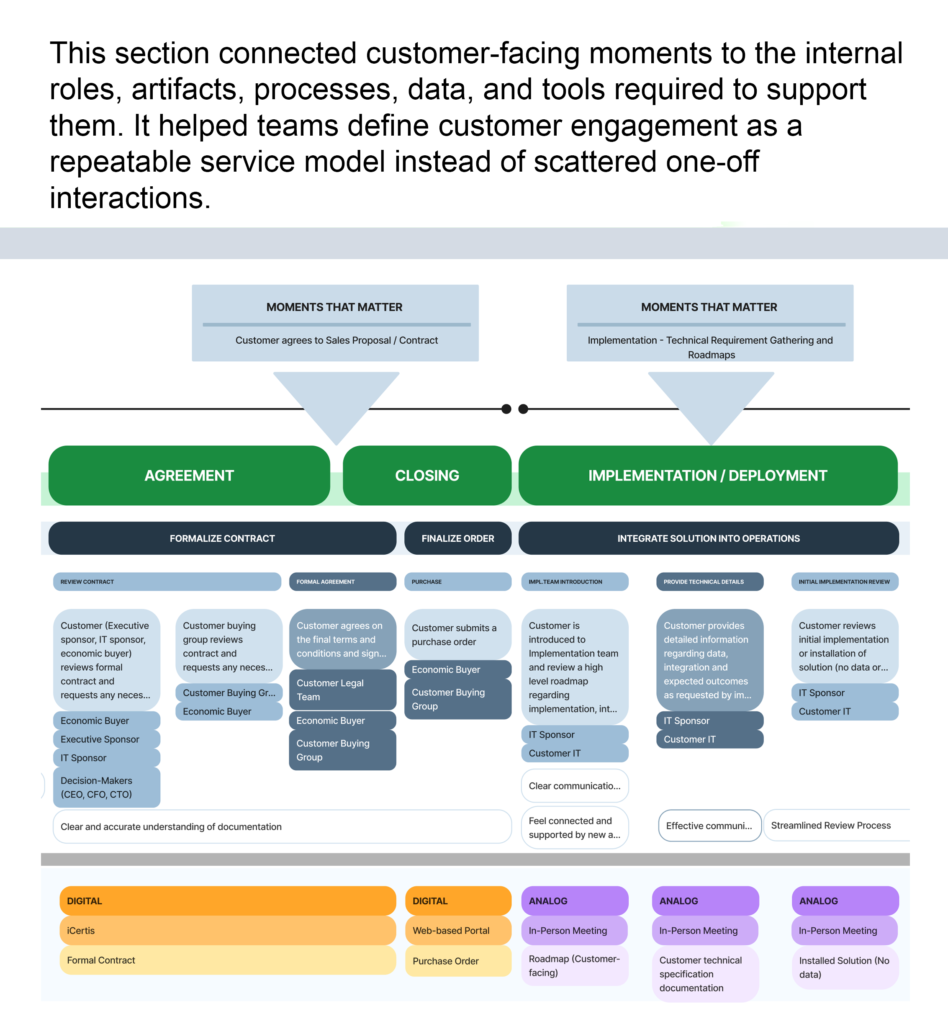
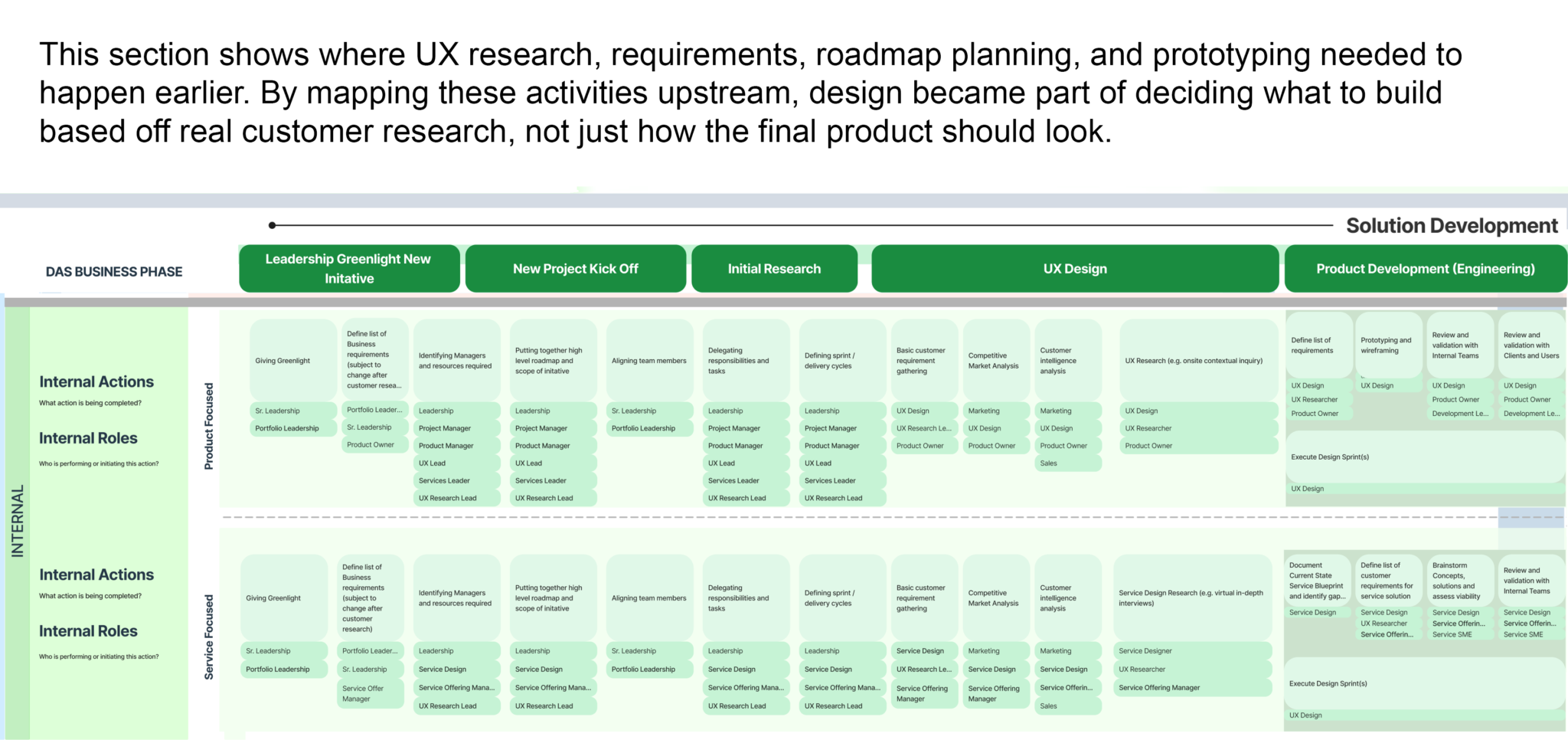
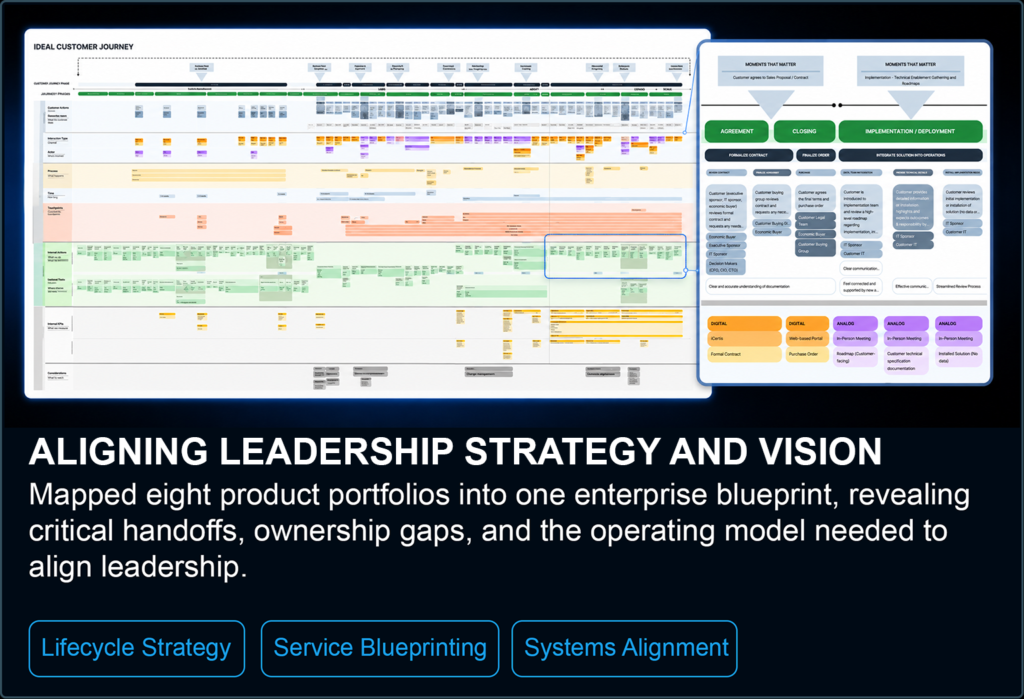
I then mapped those findings across the end-to-end customer journey, connecting what teams asked, when they asked it, which customers were contacted, how the interaction was owned, and which decision the evidence was expected to support. The research shifted the problem from improving individual surveys to redesigning how the enterprise listened, learned, and acted.
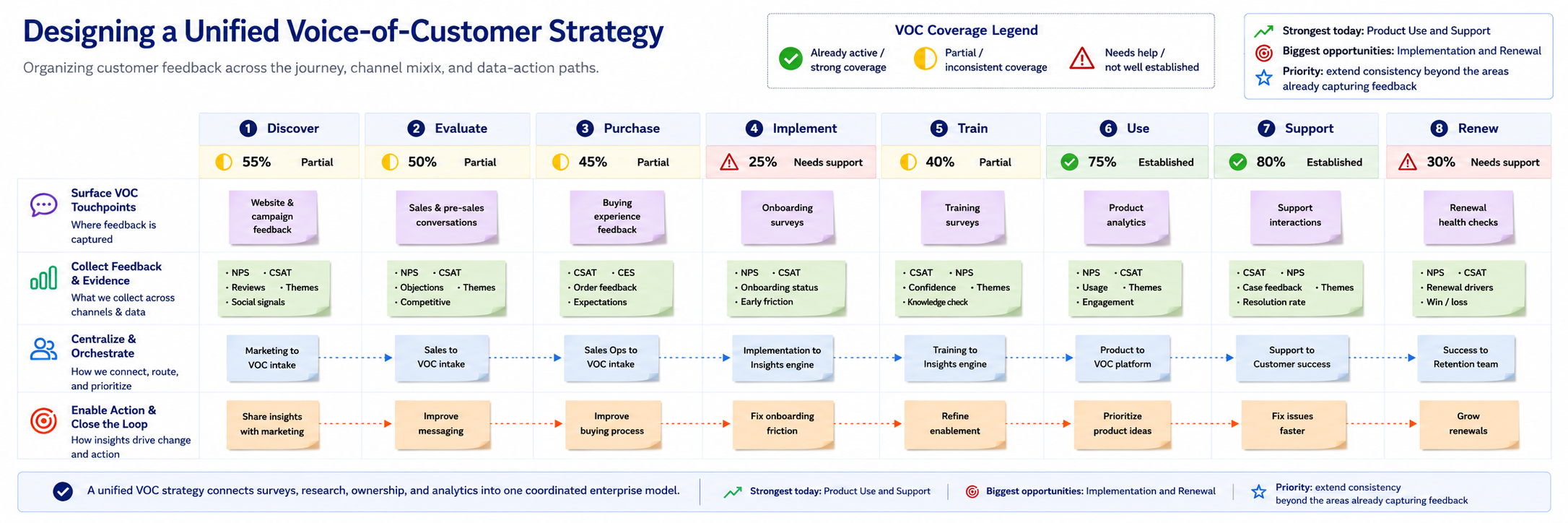
Standardizing the Signal Without Centralizing the Work
The organization did not need one universal survey or a single centralized research function. It needed a shared structure that created consistency where enterprise comparison mattered while preserving flexibility for individual products, customers, and business contexts.
I translated the findings into a coordinated Voice of Customer strategy built around three principles: standardize essential measures, organize feedback around the customer journey, and connect evidence to clear organizational decisions. The model defined how signals could be captured, synthesized, governed, and acted on across the enterprise.
PROJECT STATUS — PROPOSED OPERATING MODEL
This was not a deployed capability. The framework gave leadership a basis for deciding ownership, resourcing, piloting, and sequencing.
Built for an Executive Decision, Not a Research Report
The strategy had to do more than document research; it had to support decisions by leaders, portfolio teams, product teams, and researchers. I translated the operating model into a future-state analytics concept connecting customer health, measurement coverage, emerging themes, source evidence, and action ownership within one coherent experience.
I then synthesized the research, operating model, and proposed analytics direction into an executive narrative for incoming operations leadership. The recommendation was practical: establish Voice of Customer as a governed capability that carries forward the strongest existing practices, closes measurement gaps, and connects evidence to accountable action—rather than asking every team to adopt another disconnected tool.
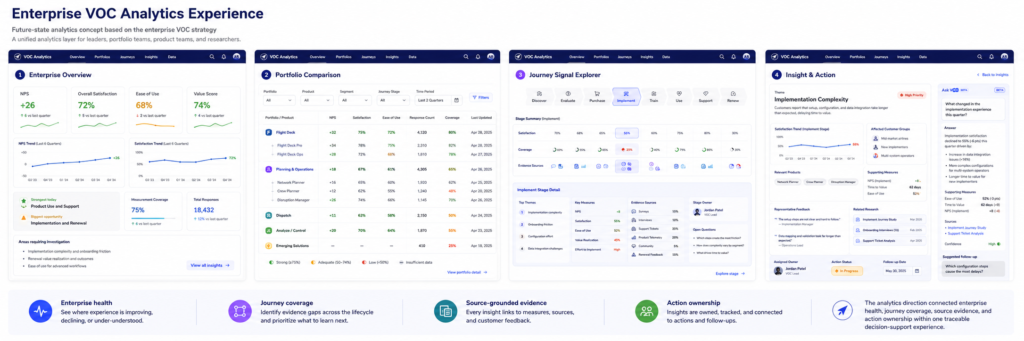
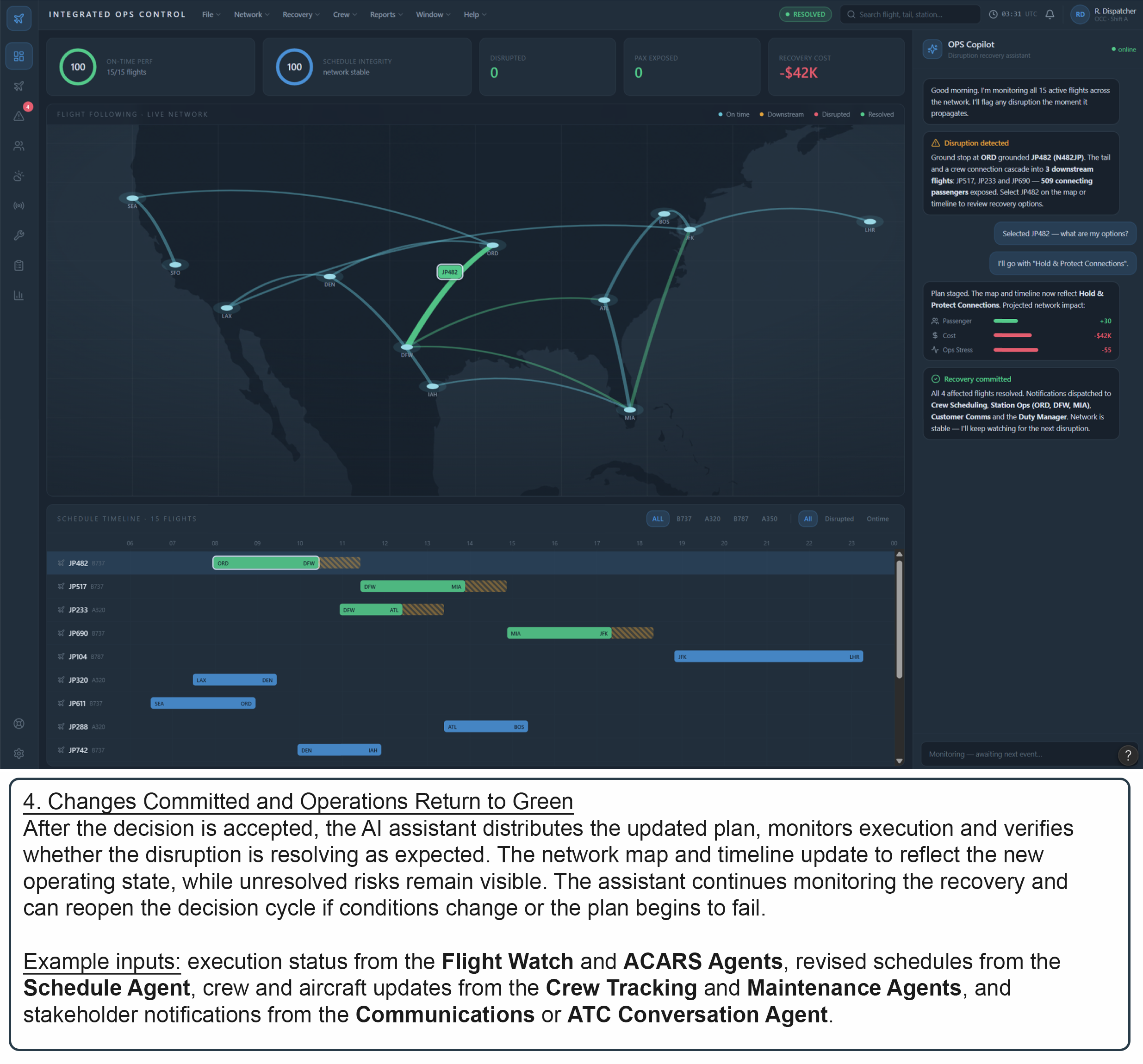
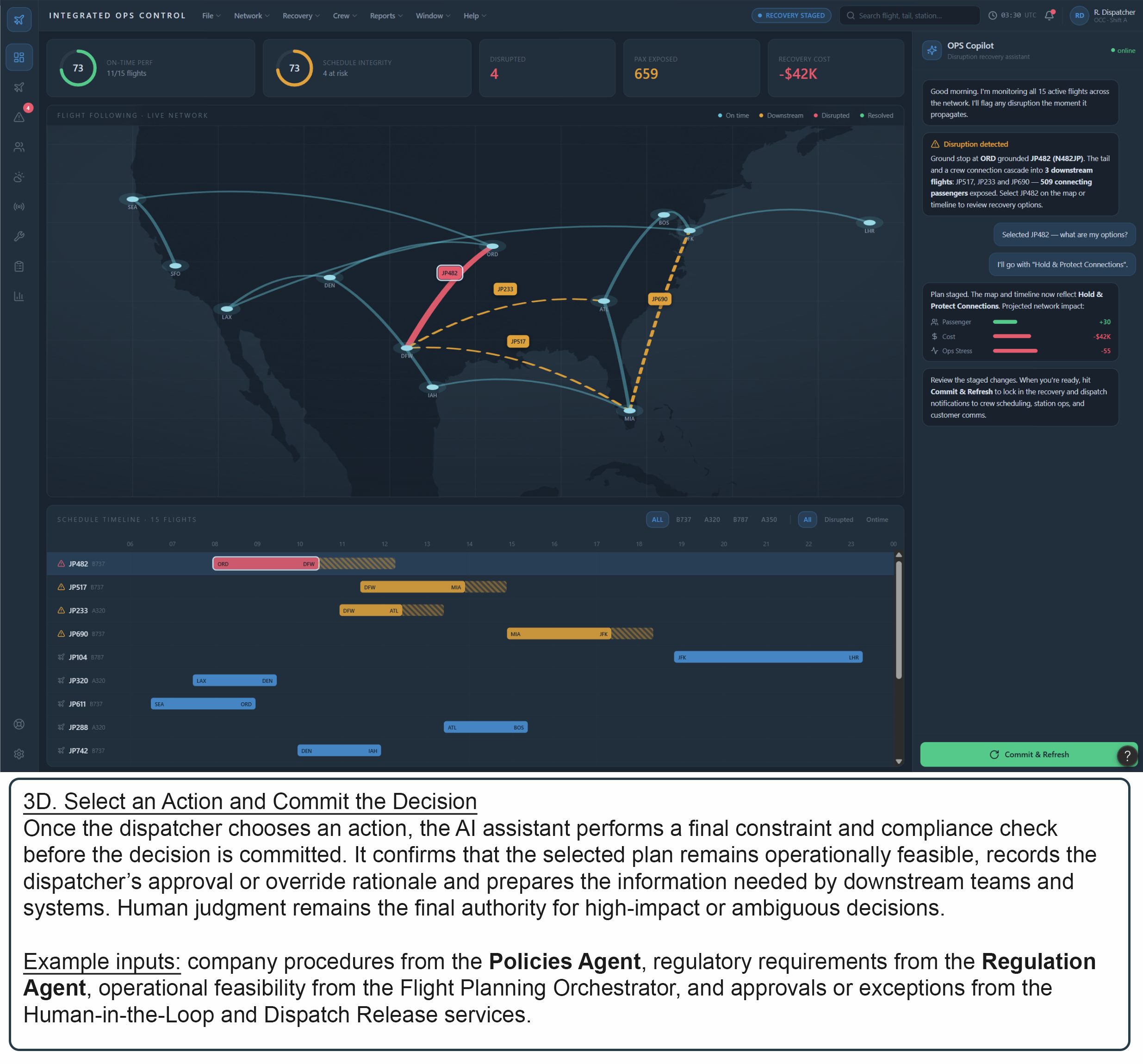
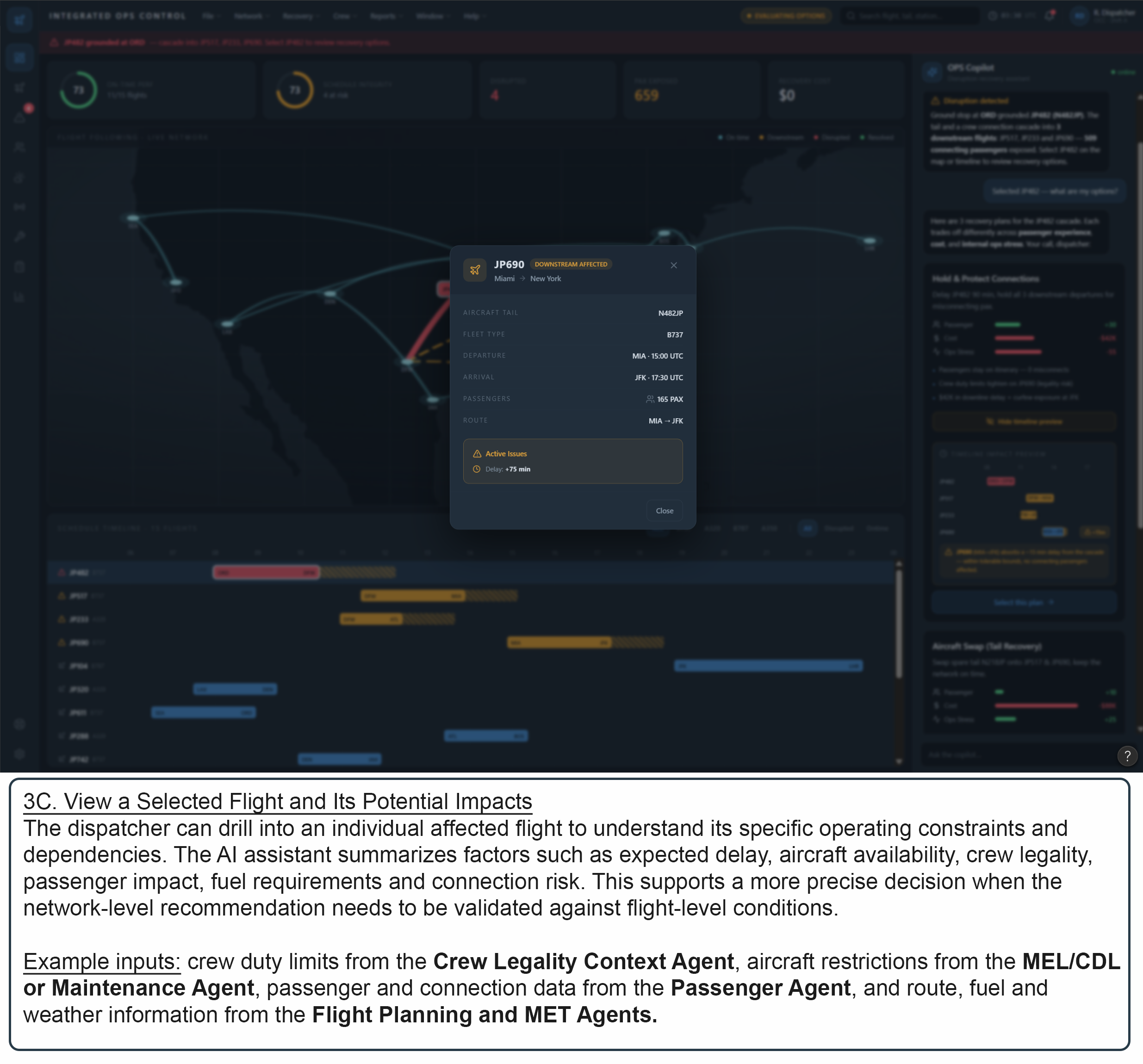
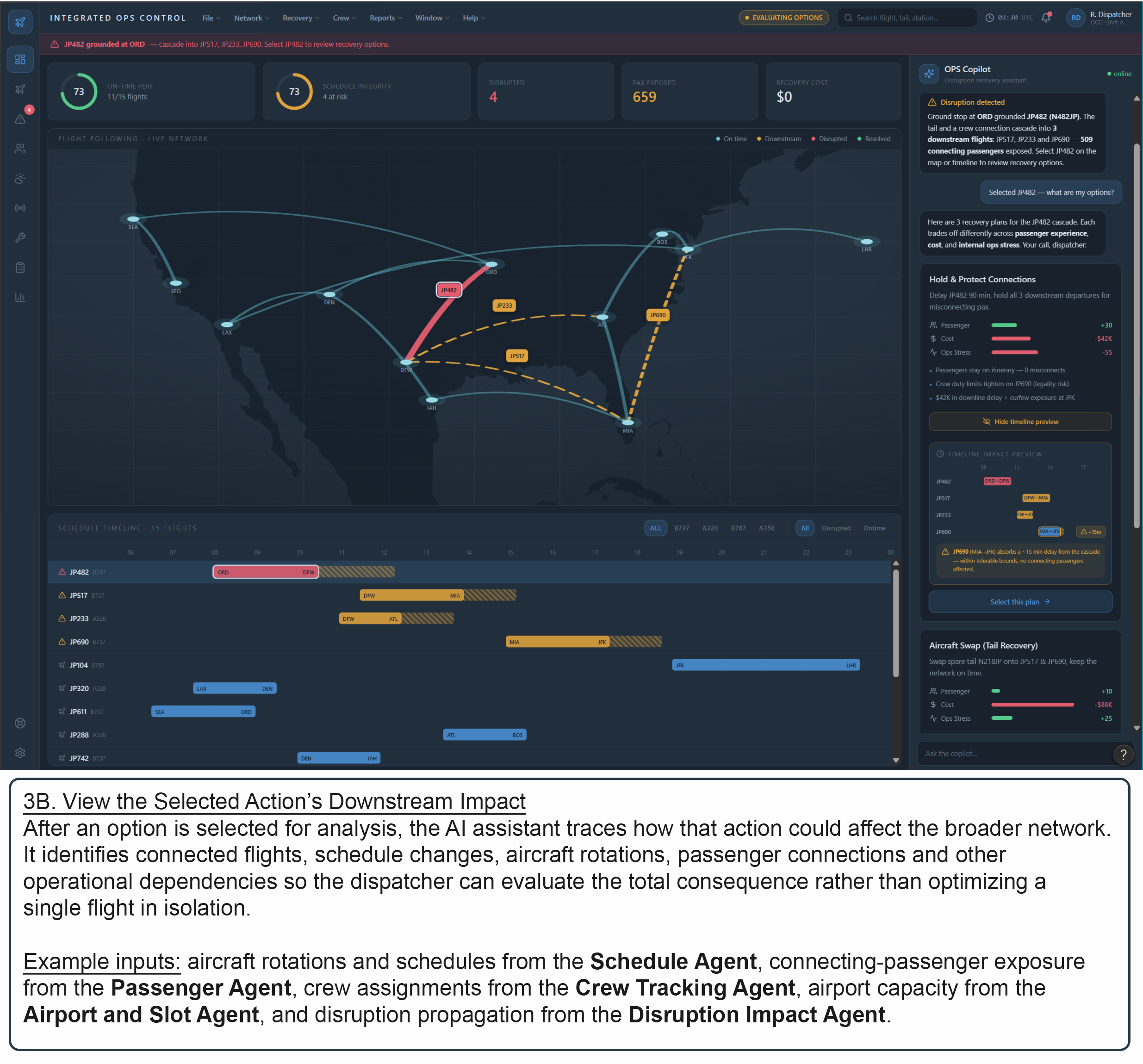
I designed this future-state concept to show how the proposed operating model could turn governed customer evidence into traceable decisions, ownership, and follow-up. It was a proposal, not a deployed product; values shown are illustrative.
What the Work Delivered — and What Happened Next
The executive readout was well received and gave incoming leadership a clear starting point. Shortly afterward, Boeing’s sale of the business to private equity triggered a restructuring that dissolved much of the organization, and the strategy was set aside before ownership, piloting, or implementation could begin.
DELIVERED
An enterprise diagnostic of how customer evidence was collected, compared, owned, and used; a unified Voice of Customer operating model; a future-state analytics concept; and an executive narrative connecting the work to portfolio visibility, accountability, and decision-making.
RESULT
The work reframed Voice of Customer from a survey-design problem into an enterprise listening-system problem. It did not reach implementation, but it established a credible direction for leadership and the conditions any future analytics capability would need: consistent measures, clear ownership, governed evidence, and traceable action.
Research leadership can shape more than individual studies and insights—it can define how an organization collects, governs, and acts on customer evidence.
Common Questions
The strongest evidence was the pattern across sources, not a single survey result. One customer could be contacted by three portfolios in the same quarter, while leadership could weigh a five-response survey the same as one with 200 responses because no shared definition of a trustworthy signal existed. The enterprise map made those inconsistencies, coverage gaps, and ownership boundaries visible together.
Enough to define the system problem and a credible direction—not enough to validate or implement the operating model. I focused the investigation on existing survey structures, ownership, lifecycle coverage, evidence flow, and decision use, then synthesized recurring patterns across the organization. The output was an executive starting point with explicit next decisions, not a claim that the system was finished.
I grounded the model in multiple forms of existing evidence: survey structures, ownership patterns, customer-journey coverage, current reporting practices, and the decisions teams were trying to support. I also preserved product-level flexibility rather than forcing a universal process. The next step would have been a controlled pilot to test governance, comparability, and action ownership before scaling.
The readout gave incoming leadership a clear starting point, but the business was sold to private equity and the subsequent restructuring dissolved much of the organization before the work could be piloted or implemented. The strategy therefore remained a proposed direction.
I would have started with a limited set of portfolios and journey stages, established a small group of shared measures, assigned explicit owners, and tracked whether the model reduced duplicate outreach, closed coverage gaps, improved signal comparability, and shortened the path from evidence to action. Expansion would depend on what the pilot proved.
Specific organizational constraints, product details, and implementation considerations remain confidential; I can discuss the strategic tradeoffs, sequencing decisions, and lessons behind the proposal directly.
RECOMMENDED NEXT CASE STUDIES →
See how governed customer evidence can shape executive alignment and strengthen research across an organization.
© 2026 Harsh Kumar. Some project details have been generalized or redacted to protect confidential information.