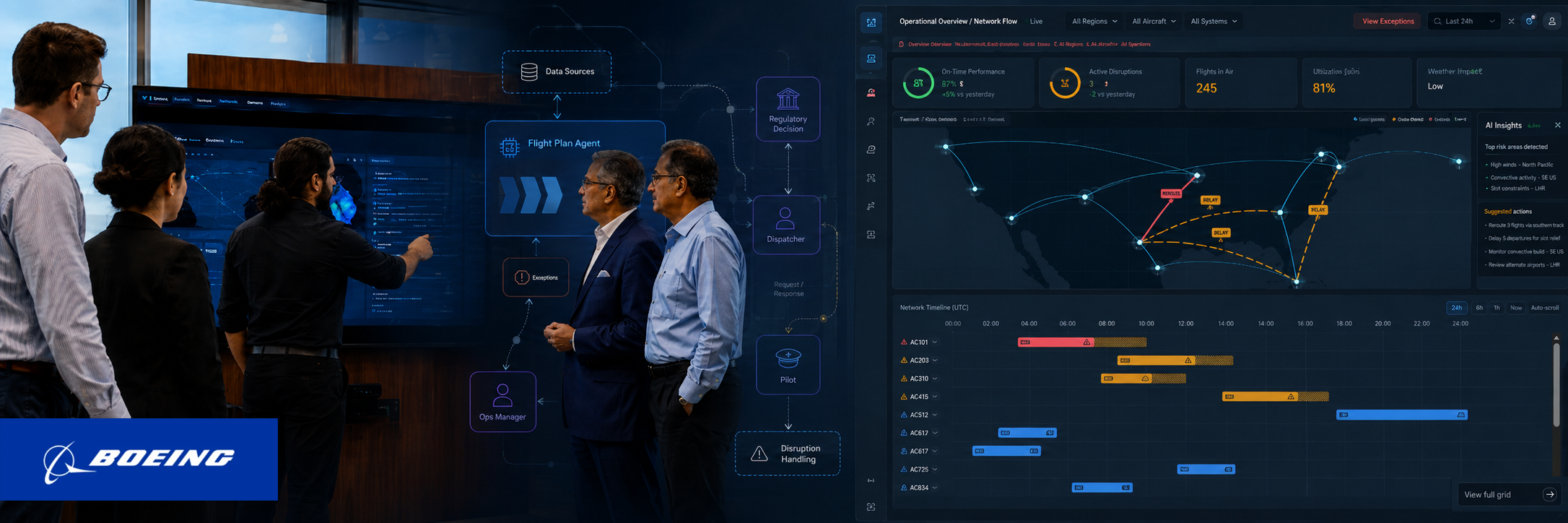
- Service Design Leadership
- AI Product Strategy
- Operating Model Design
- Agentic Workflow Design
- Rapid Prototyping
AI-ENABLED AIRLINE OPERATIONS
Led a Five-Day Strategy Sprint From Field Research to a Buildable Human–AI Workflow
In a five-day onsite engagement with a rapidly growing airline operator, I led the service design work that turned a broad interest in AI into an evidence-based operating model, a prioritized use case, and an actionable product direction.
I planned and conducted field research, reconstructed the operation across roles and systems, facilitated decisions about human and agent responsibilities, defined the end-to-end product workflow, and translated the resulting strategy into requirements for prototyping.
The AI engineering team built the functional agent prototype demonstrated during the final executive readout. I defined the operational logic, source-data requirements, human approval boundaries, interaction model, and customer narrative it was built against.
CLIENT
Major Airline Operator
TIMELINE
Five-Day Onsite Strategy Sprint
ROLE
Service Design Lead & Principal Facilitator
RESEARCH
~20 Hours of Onsite Interviews & Observations
DELIVERED
Operating Model, Prioritized Workflow & Prototype Direction
From Operational Evidence to Product Direction
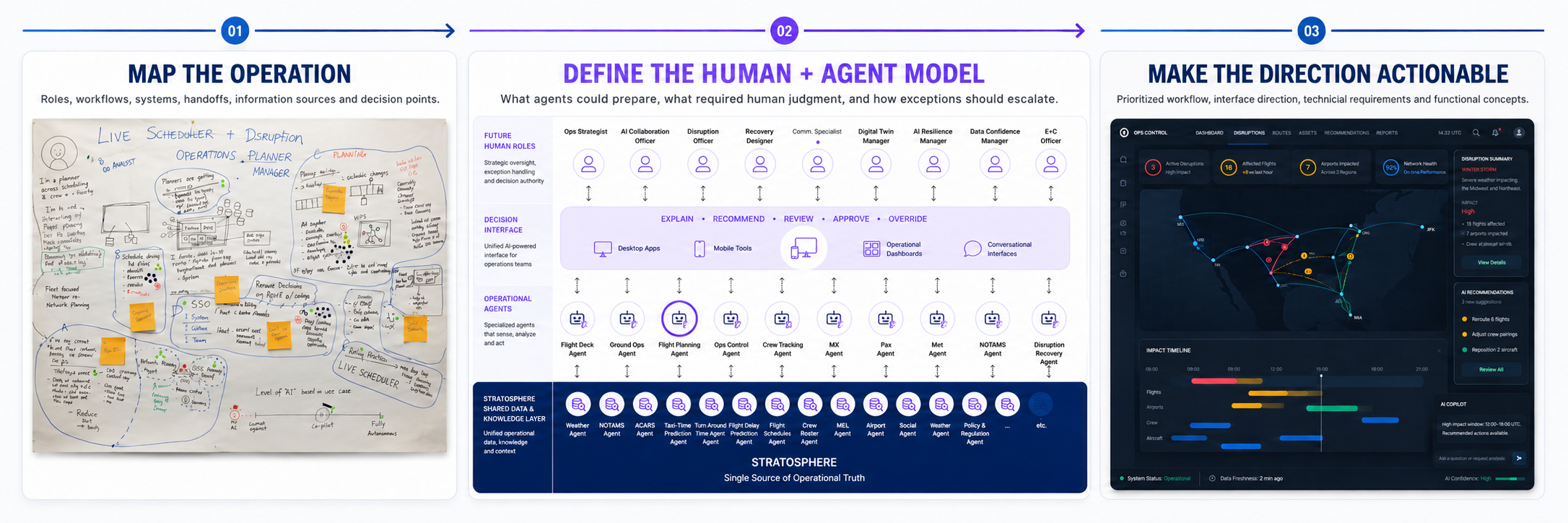
I led the work through three connected levels: understanding the operation, defining how humans and agents should work together, and translating that model into a focused product and engineering direction.
Leading the Five-Day Engagement
Before arriving onsite, I interviewed customer sponsors, reviewed available account and product research, studied the airline’s operating environment, and structured a five-day process around the decisions the team needed to make.
During the engagement, I led field observation, current-state synthesis, customer validation, future-state facilitation, AI opportunity prioritization, product framing, and development of the final executive readout.
My role was to keep operational experts, customer leaders, product, design, and AI engineering working from one shared model. I translated the research and workshop decisions into the workflow, human-control boundaries, product requirements, and executive narrative used to advance the concept.
Reconstructing the Operation From Field Evidence
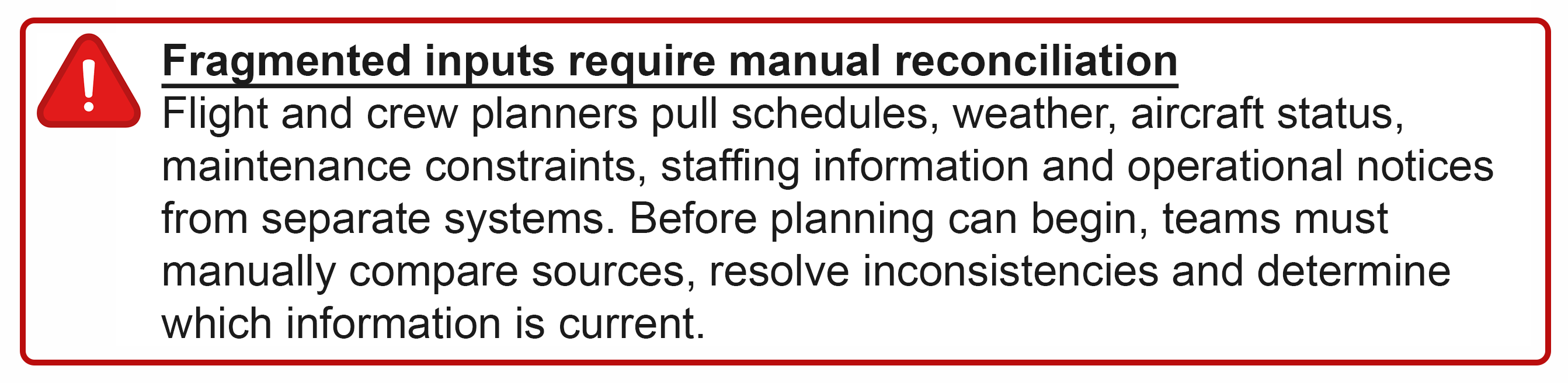
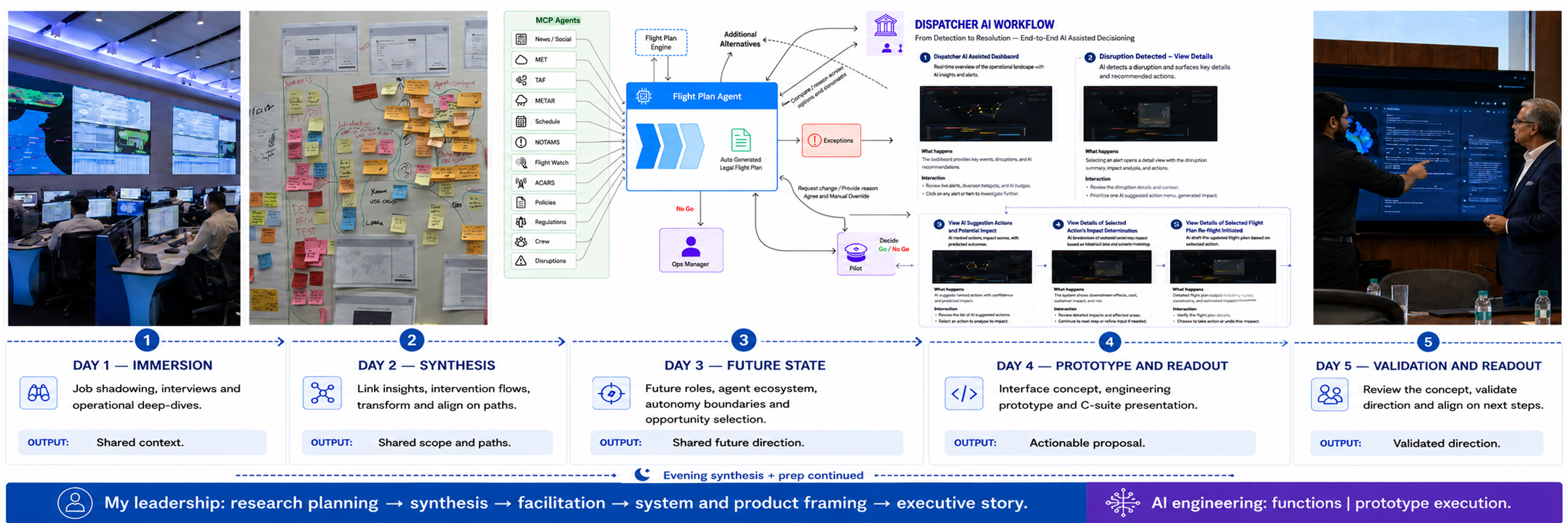
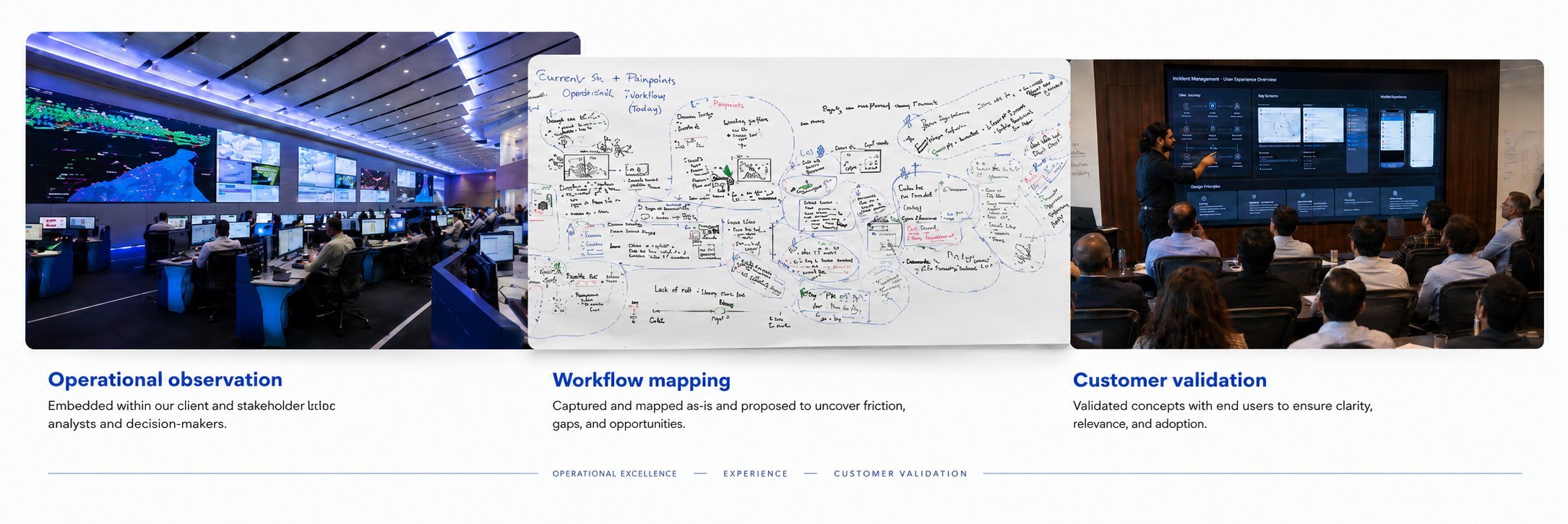
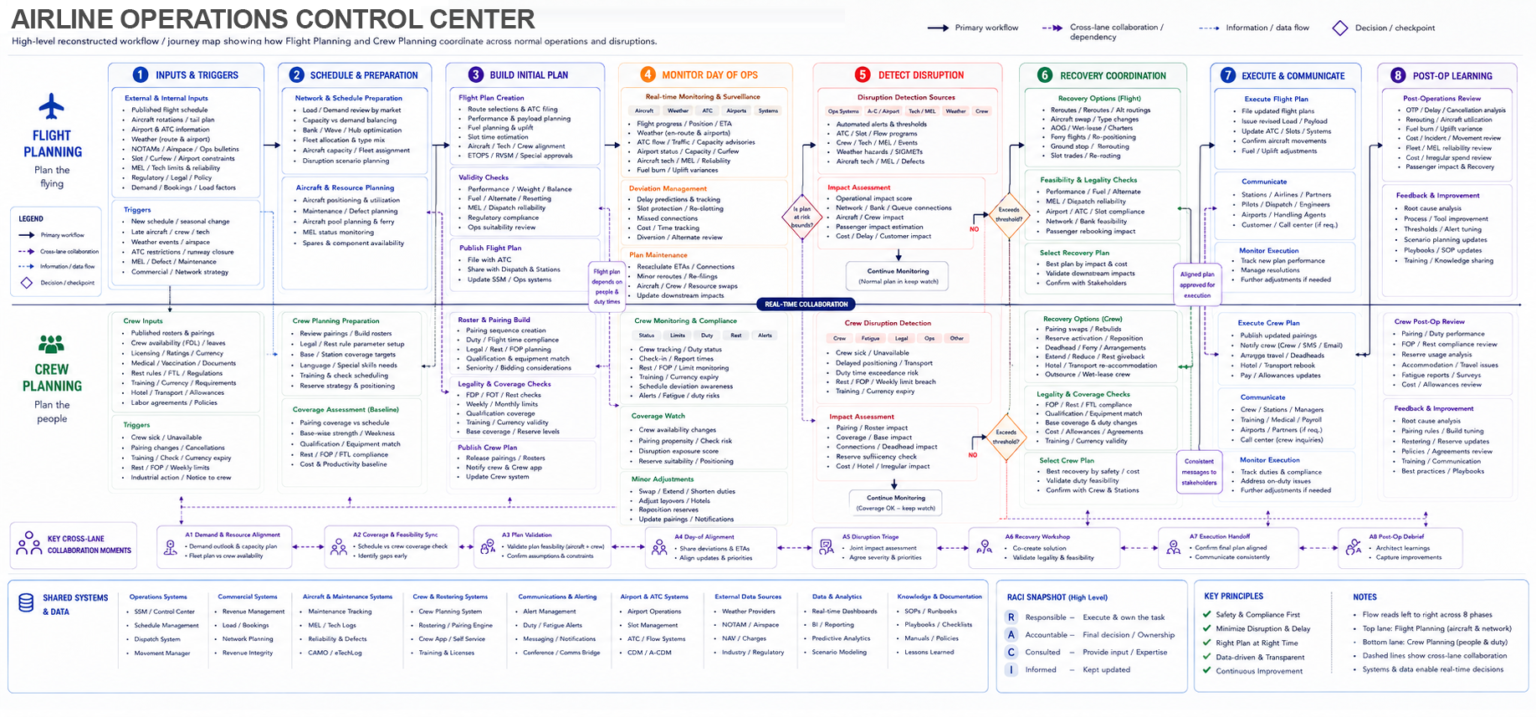
Through approximately 20 hours of job shadowing, interviews, and direct observation inside the operations control center, I documented how work moved across flight planning, crew planning, dispatch, maintenance, and disruption response.
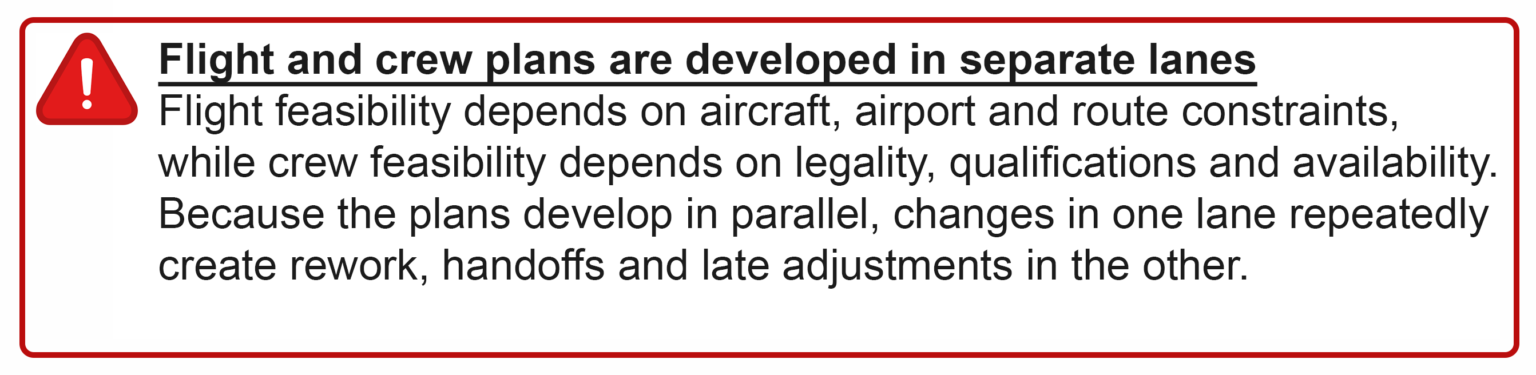
No consolidated current-state model existed. I reconstructed one from field notes, employee explanations, operational artifacts, existing product knowledge, and customer corrections. The resulting model connected work that individual departments understood separately but had not previously represented as one operating system.
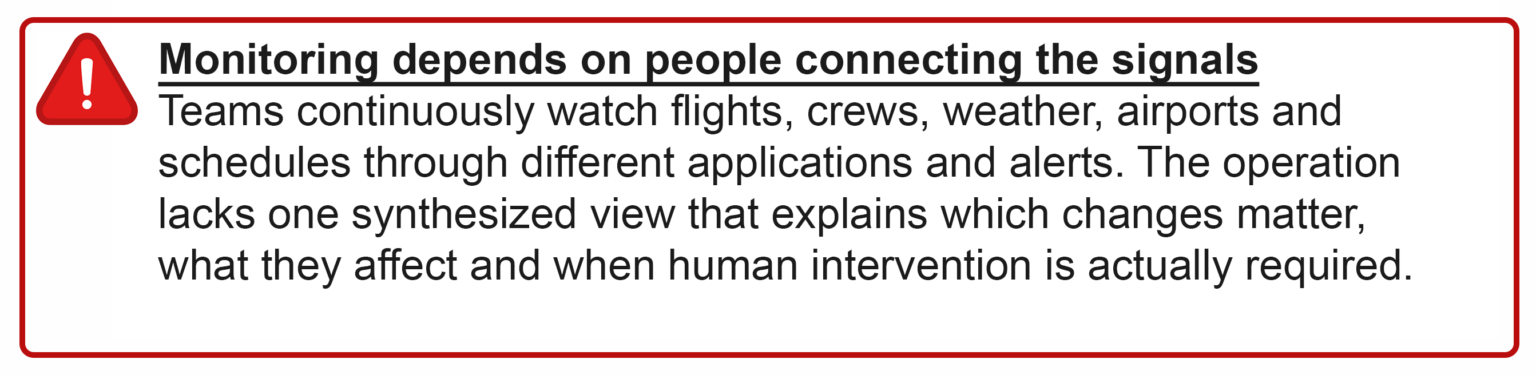
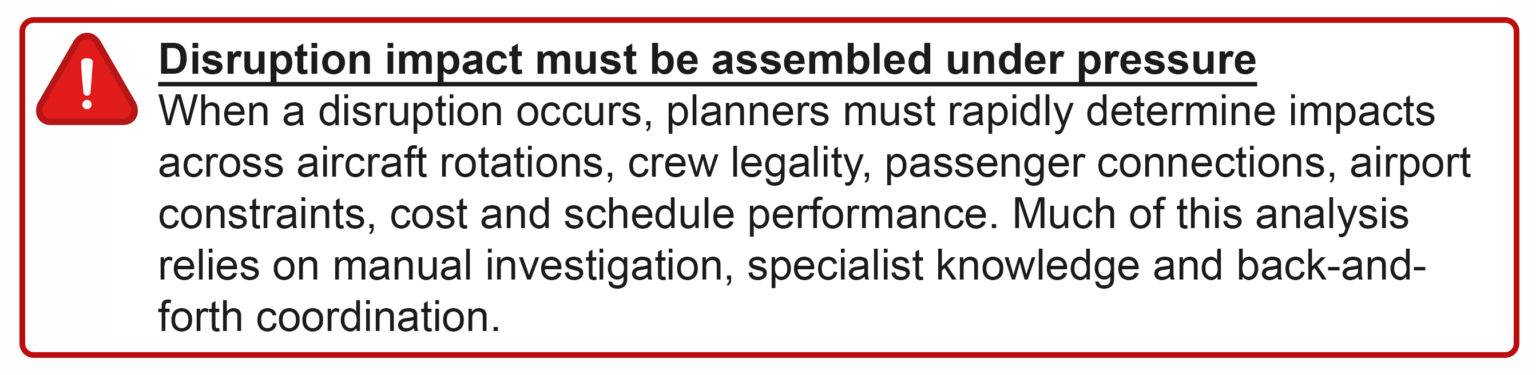
I used the synthesis to identify repeated information handling, fragmented handoffs, tool switching, manual reconciliation, and decision points where automation could prepare work without removing human authority.
What the model revealed
One specialized role was staffed continuously to monitor, interpret, and route high-volume flight-critical information. Elsewhere, preparing a single flight plan required approximately 15–20 minutes of manual copying, reformatting, and reconciliation.
These findings pointed to a focused opportunity: use AI to prepare and coordinate information while keeping consequential operational decisions under accountable human control.
Defining What AI Could Do—and What Humans Must Control
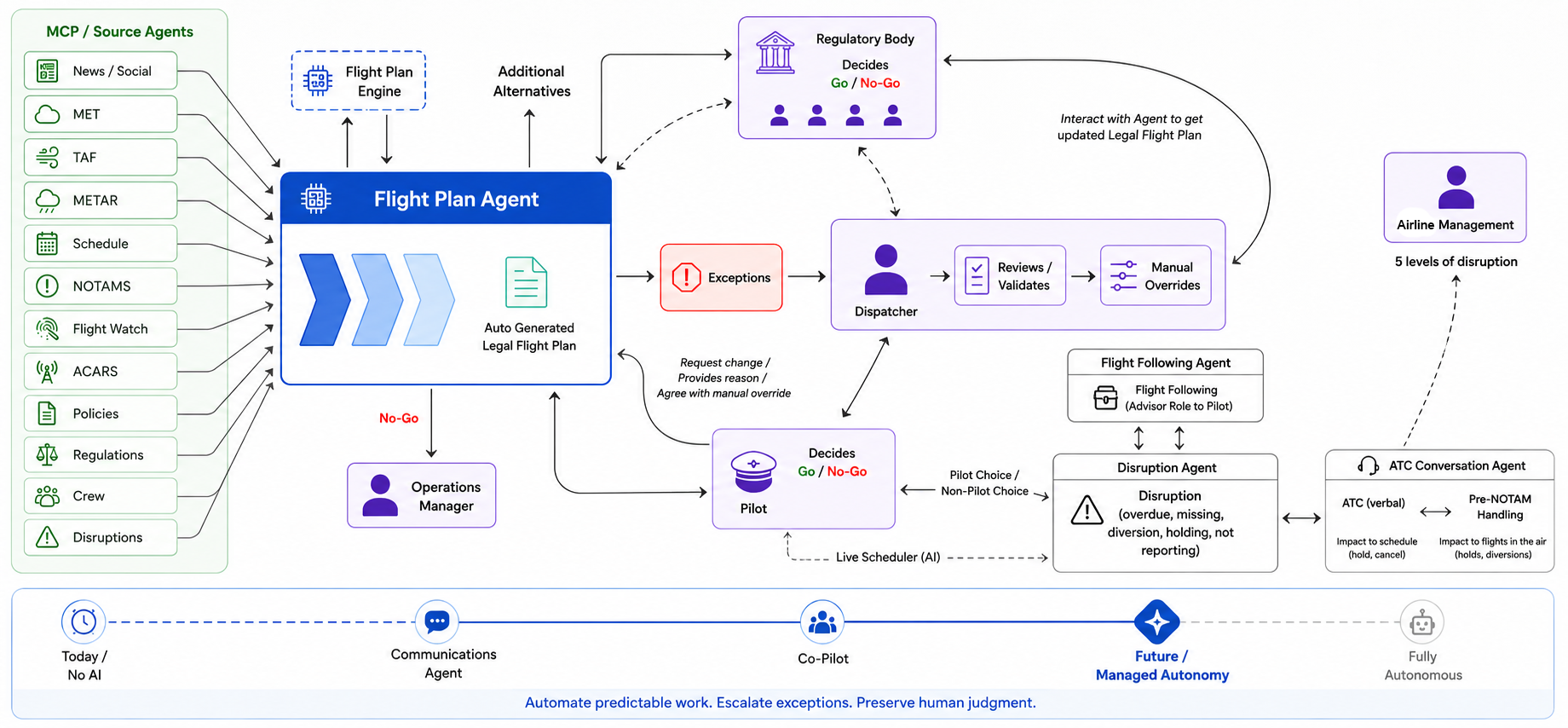
Using the current-state model, I helped the customer evaluate where AI could reduce repetitive work without taking over operational accountability. We prioritized flight planning and disruption response because the workflow combined substantial information handling, relevant supporting data, and clear points of human decision-making.
Working with customer stakeholders and AI engineering, I defined a manage-by-exception model. Agents could gather and normalize information, monitor known conditions, compare possible actions, and prepare recommendations.
Ambiguous, consequential, or low-confidence situations would escalate to dispatchers, pilots, operations managers, or regulatory reviewers. People retained the authority to inspect supporting information and approve, modify, reject, or override the proposed action.
Scaling the Workflow Into a Human + Agent Operating Model
After defining the first workflow, I expanded the pattern into a proposed operating model for the broader operations control center.
I mapped future human roles, decision interfaces, operational agents, orchestration, and supporting information sources as one layered system. Specialized source agents would collect and normalize information, operational agents would prepare coordinated outputs, and human-facing applications would support explanation, review, approval, and override.
The model gave leadership a system-level view of how individual AI capabilities could be introduced over time without becoming another set of disconnected tools. It represented a target direction for product and organizational planning—not a deployed operating system.
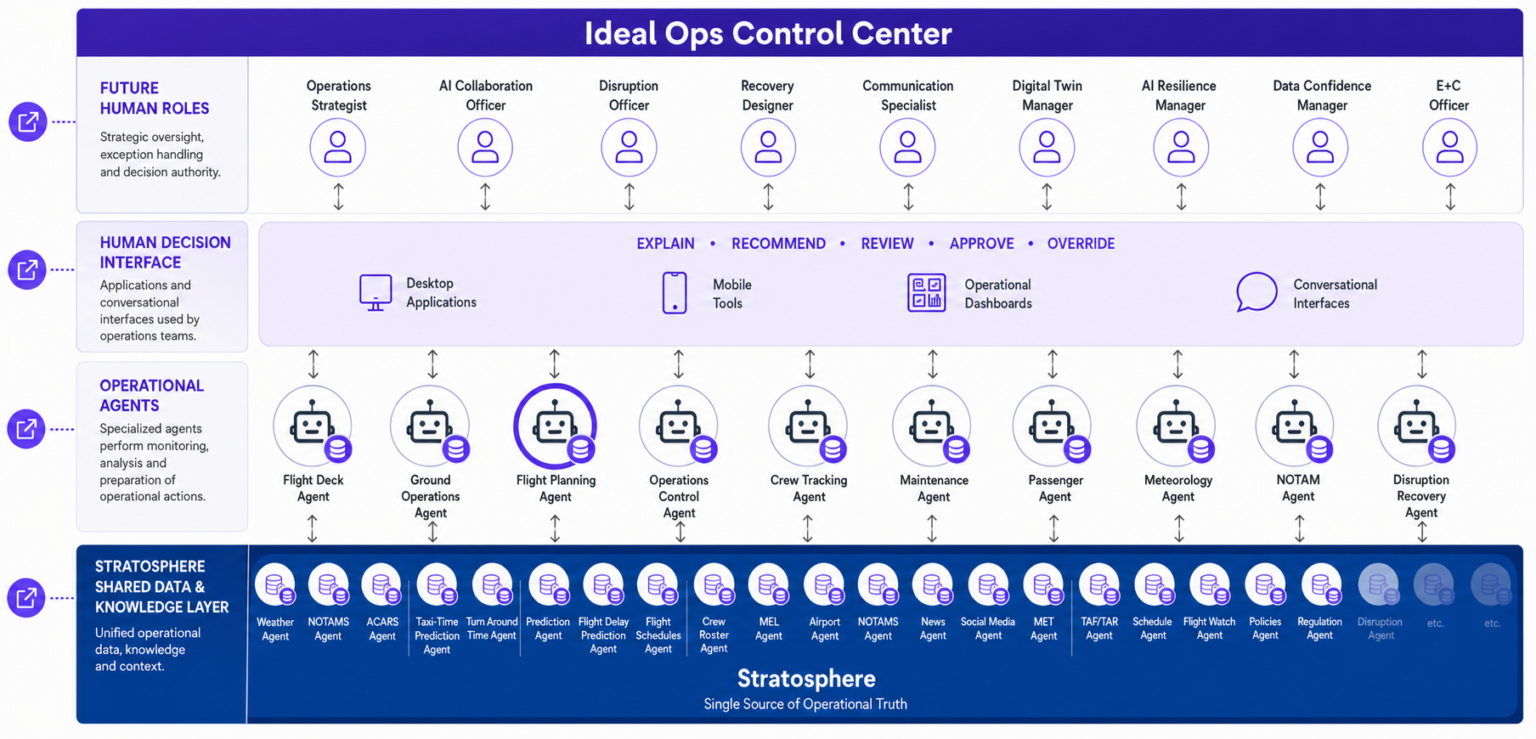
FUTURE HUMAN ROLES
Operational work shifts away from repetitive monitoring and toward supervision,
exception management, resilience, coordination, and accountable decision-making.
HUMAN DECISION INTERFACE
Recommendations, supporting evidence, confidence, downstream effects,
and approval controls appear through the tools employees already use to manage operations.
OPERATIONAL AGENTS
Specialized agents monitor conditions, combine information, prepare analyses,
and coordinate recommendations for specific operational functions.
SHARED DATA AND KNOWLEDGE LAYER
A common operational foundation connects internal systems, regulatory information,
aircraft data, weather, schedules, policies, and historical knowledge.
The proposed operating model connected future roles, decision interfaces, specialized agents, and the shared information foundation required to support them.
Turning the Operating Model Into a Focused Product Experience
The operating model established a long-term direction, but the engagement also needed a credible first product opportunity.
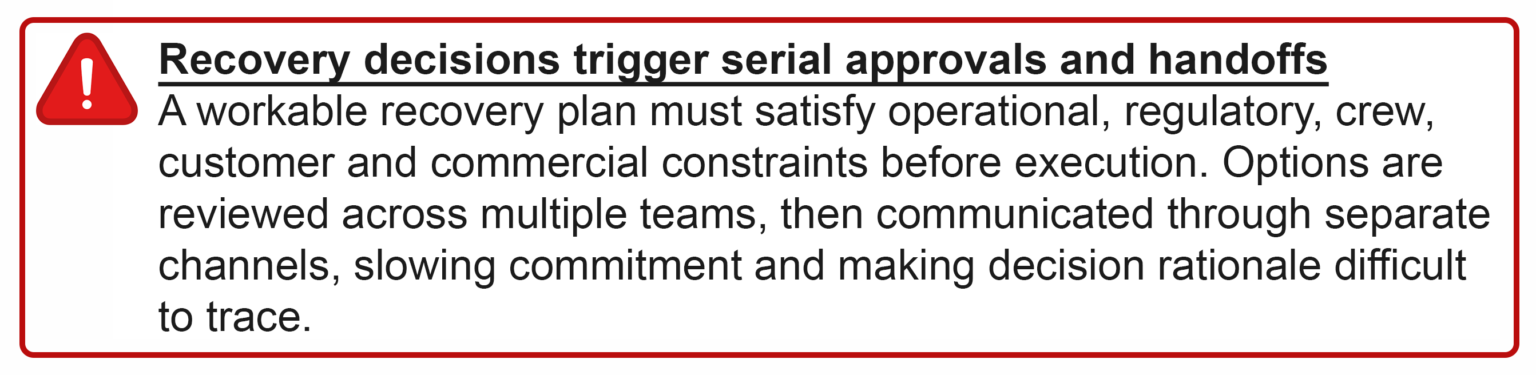
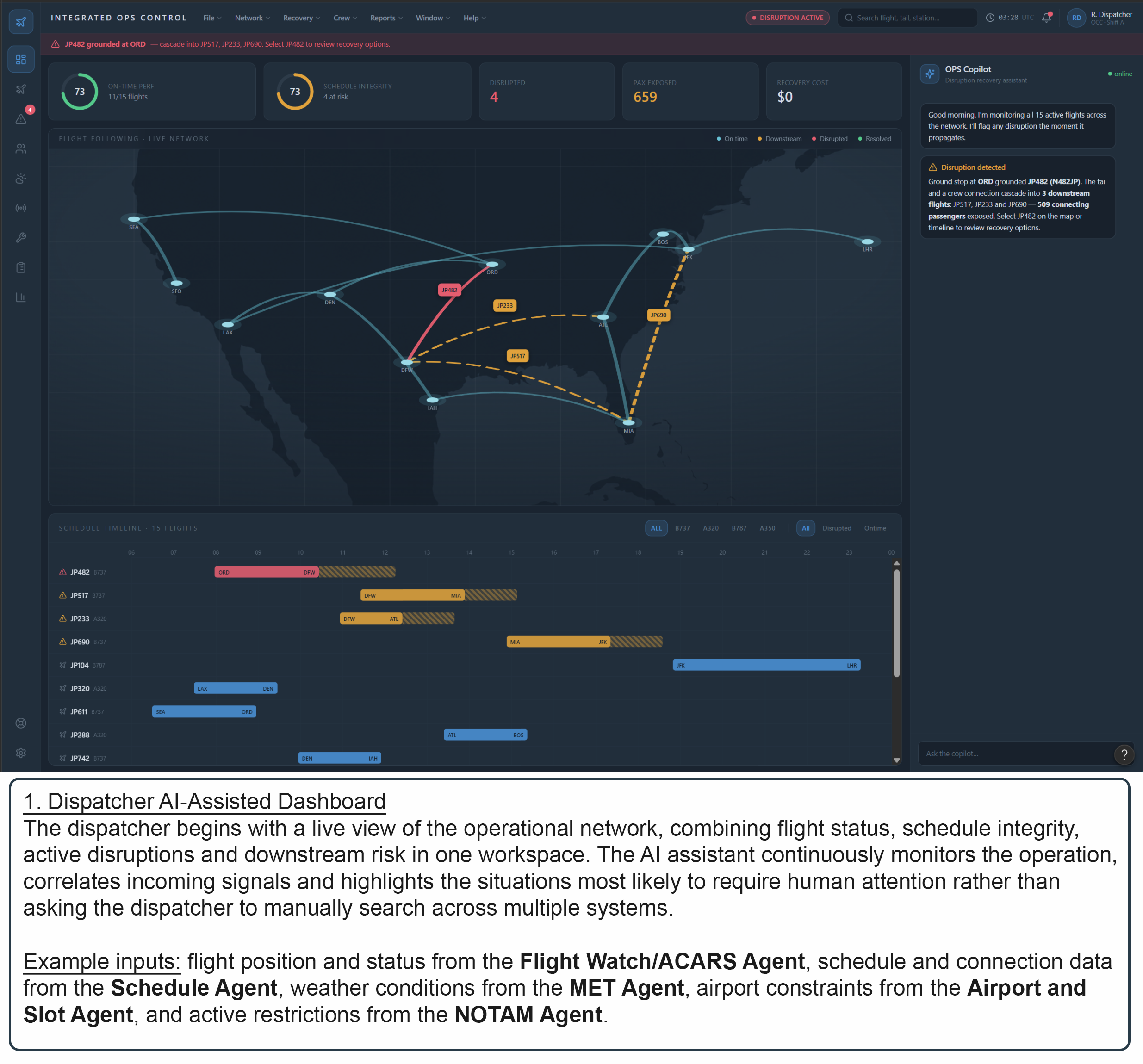
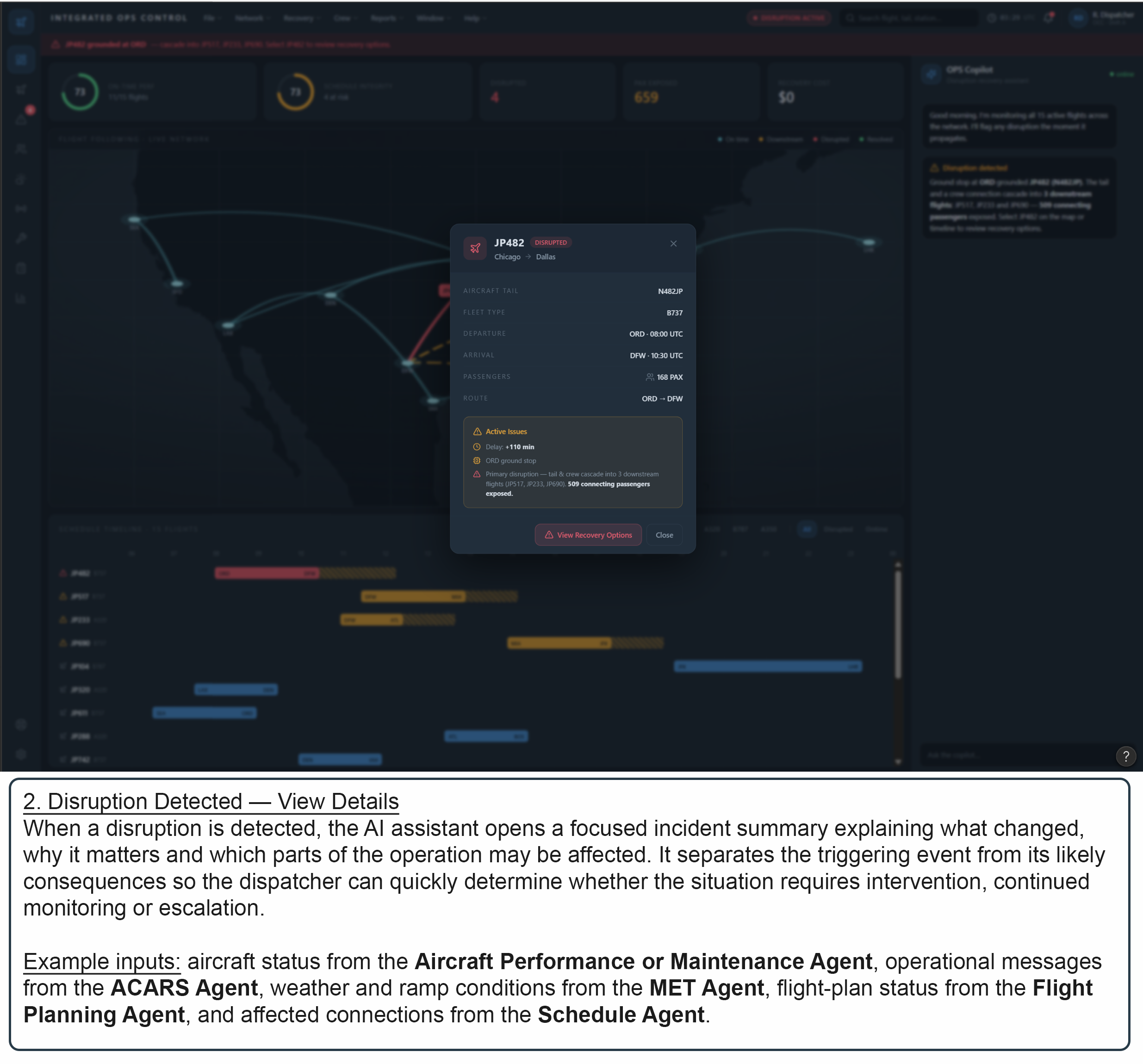
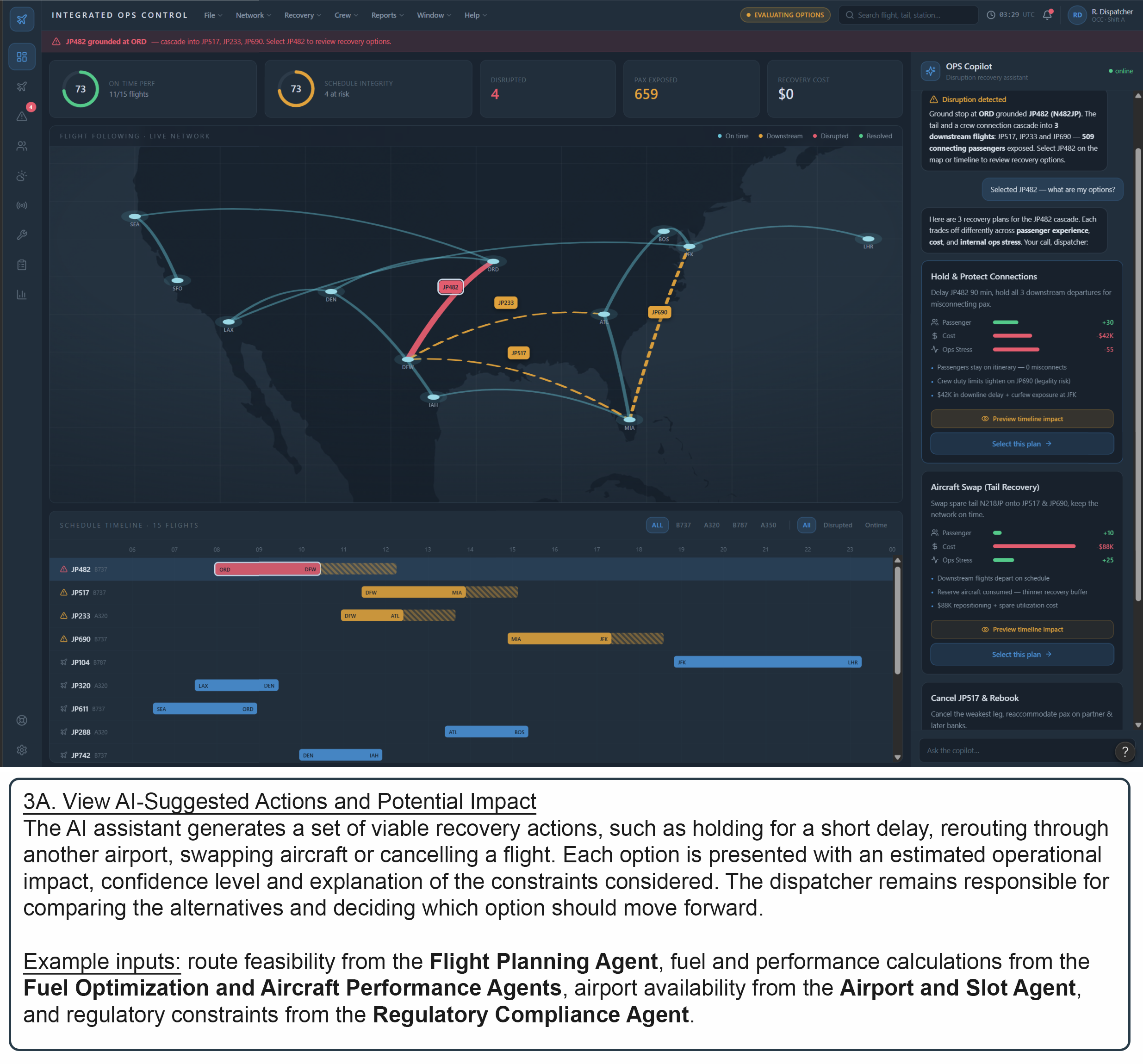
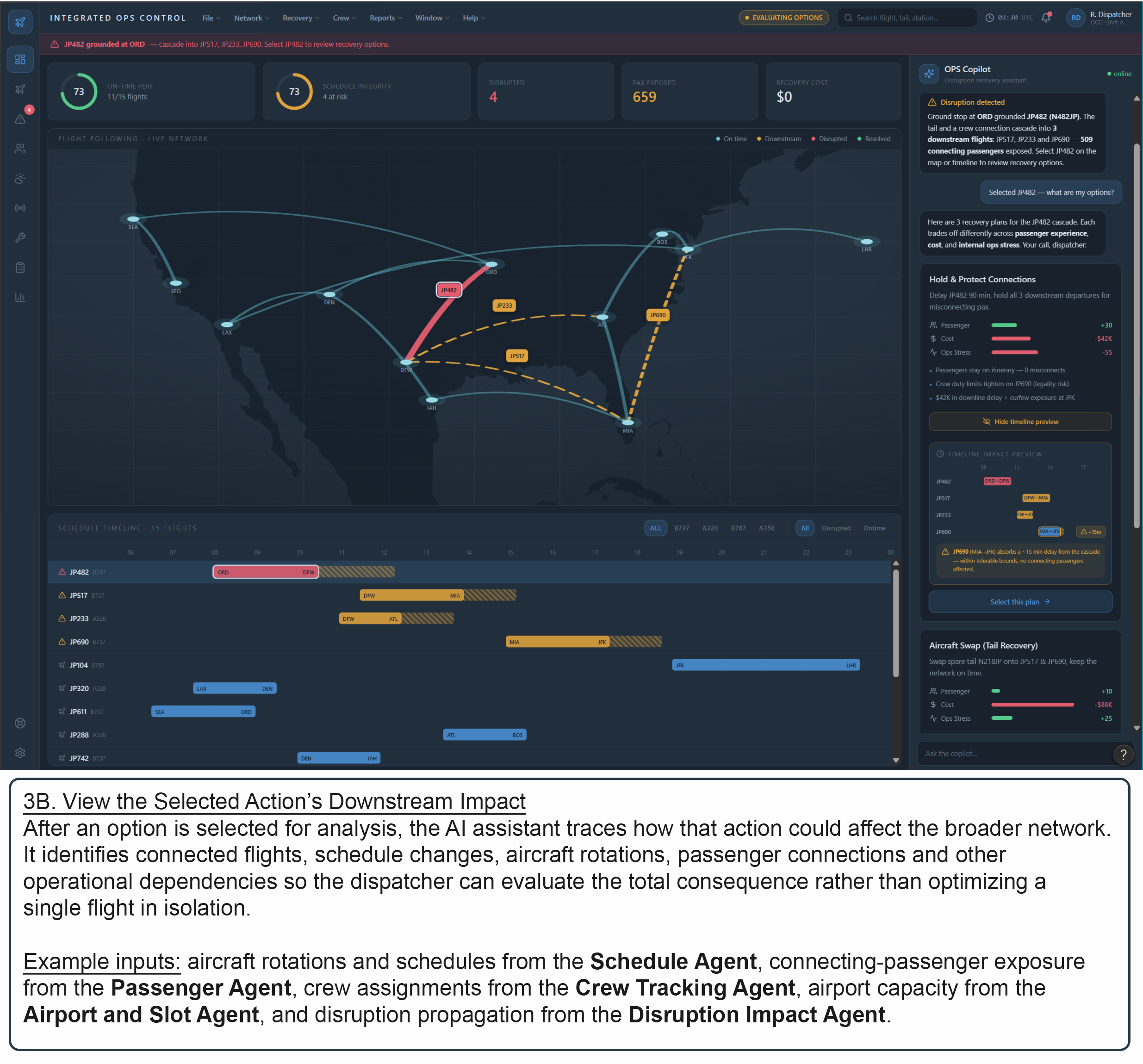
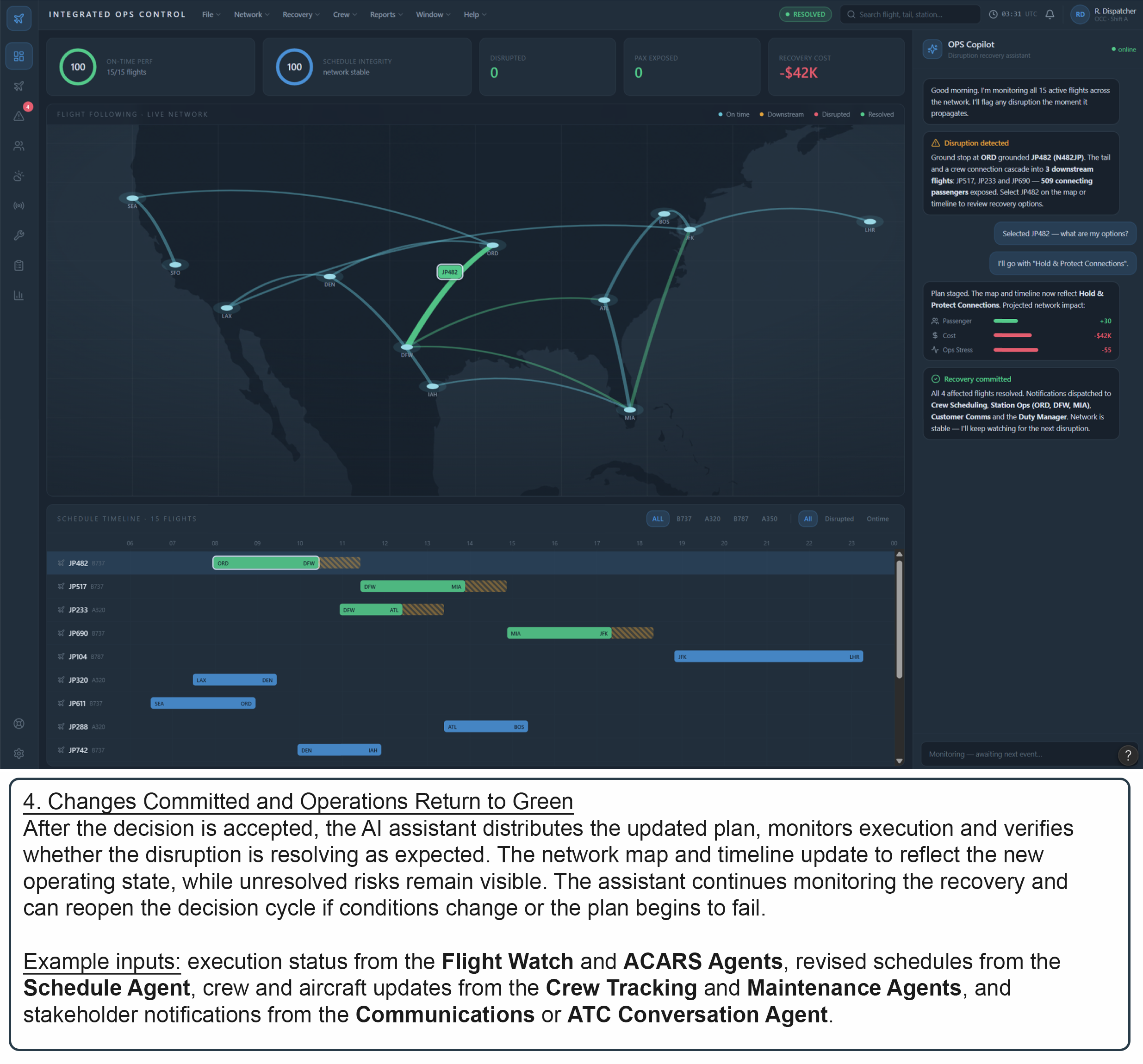
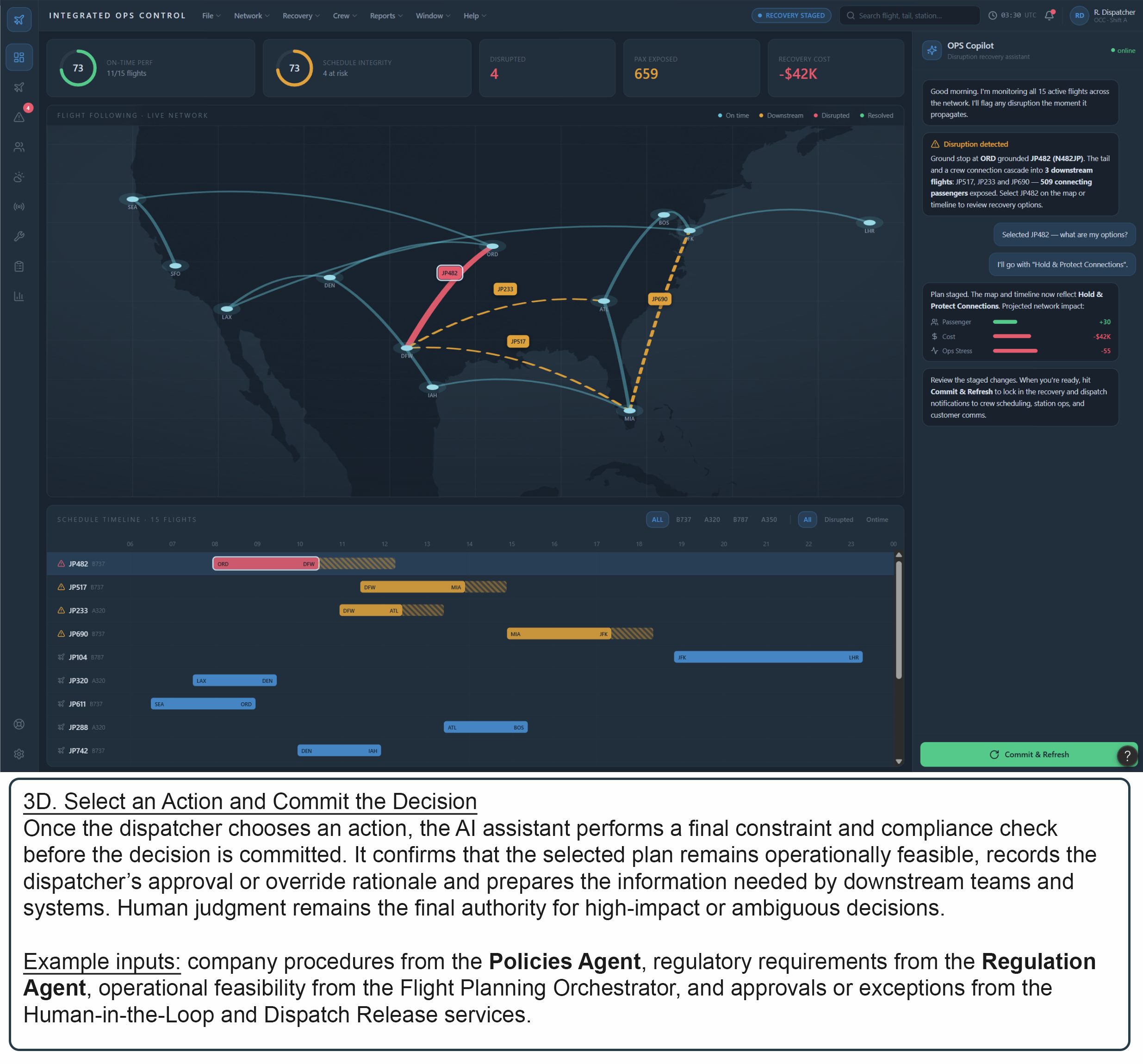
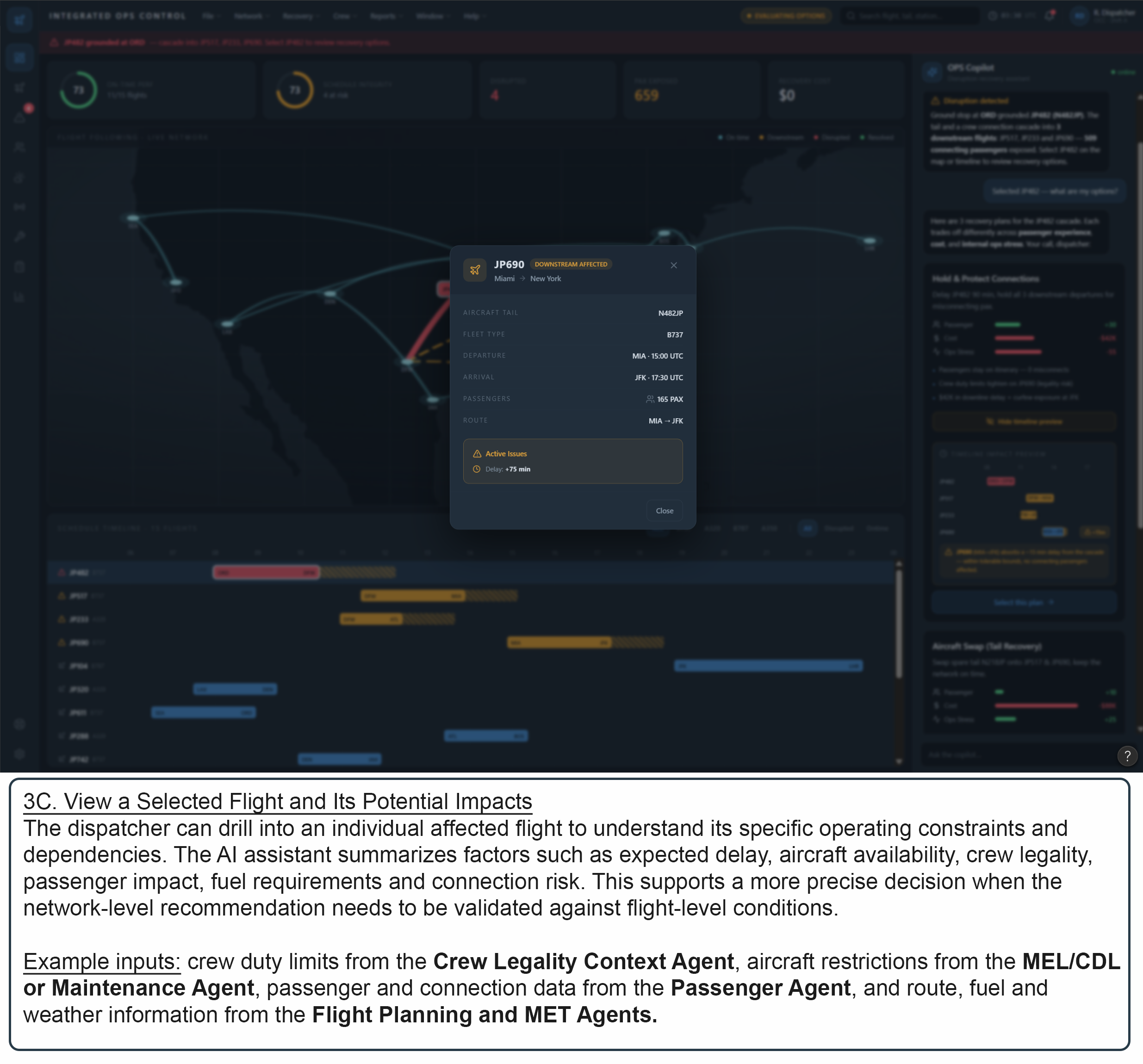
I guided the team toward AI-assisted flight planning and disruption response, then defined a five-step dispatcher workflow: monitor operations, detect an exception, compare possible actions, review downstream effects, and commit a human-approved response.
I translated that sequence into interface states, priority information, source access, recommendation logic, explanation requirements, and approval controls. The resulting concept gave customer leaders something tangible to evaluate and gave product and engineering a clearer target than a generic AI assistant.
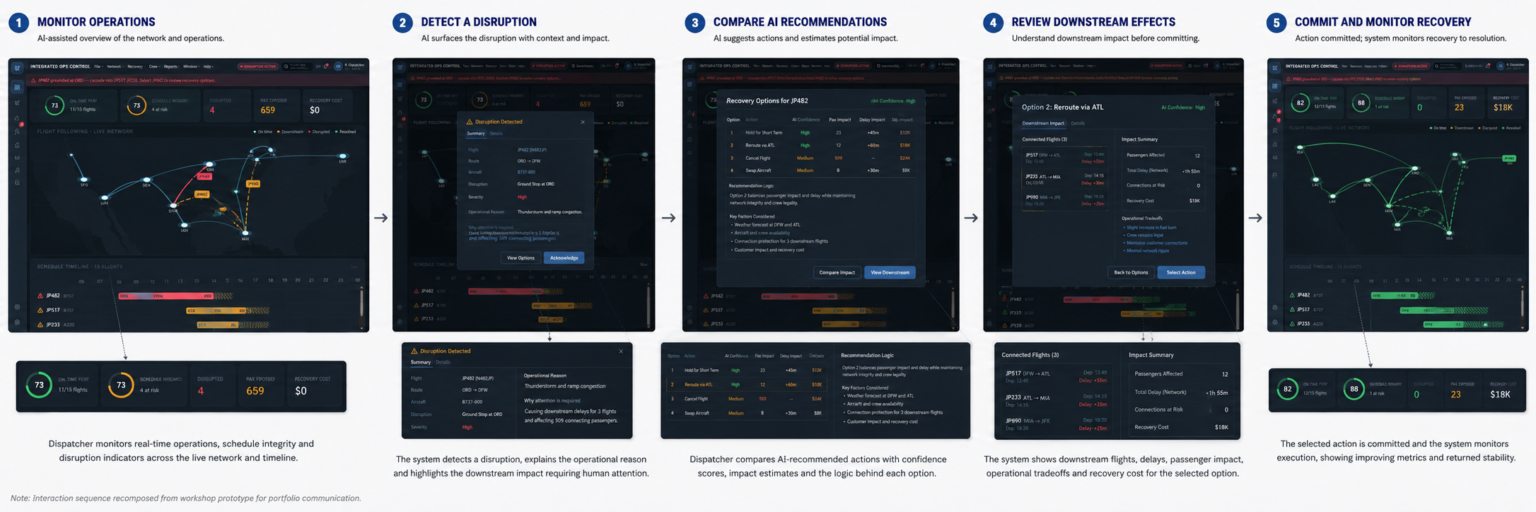
The interaction sequence was reconstructed from the workshop prototype to communicate the proposed end-to-end decision flow. Customer stakeholders reviewed the direction; frontline usability testing and production validation remained future work.
Converting the Product Direction Into Engineering Requirements
I translated the proposed experience into the inputs required for technical prototyping: the operational scenario, source-data requirements, agent responsibilities, orchestration logic, recommendation states, escalation rules, human approval points, interface requirements, and unresolved assumptions.
I also separated capabilities the team could demonstrate from dependencies that still required customer data, security review, compliance assessment, integration planning, and frontline validation. This prevented the future vision from being presented as though every technical and operational dependency had already been solved.
The AI engineering team owned implementation of the functional prototype. I owned the research-grounded workflow, customer requirements, decision logic, interface direction, and validation questions they built against.
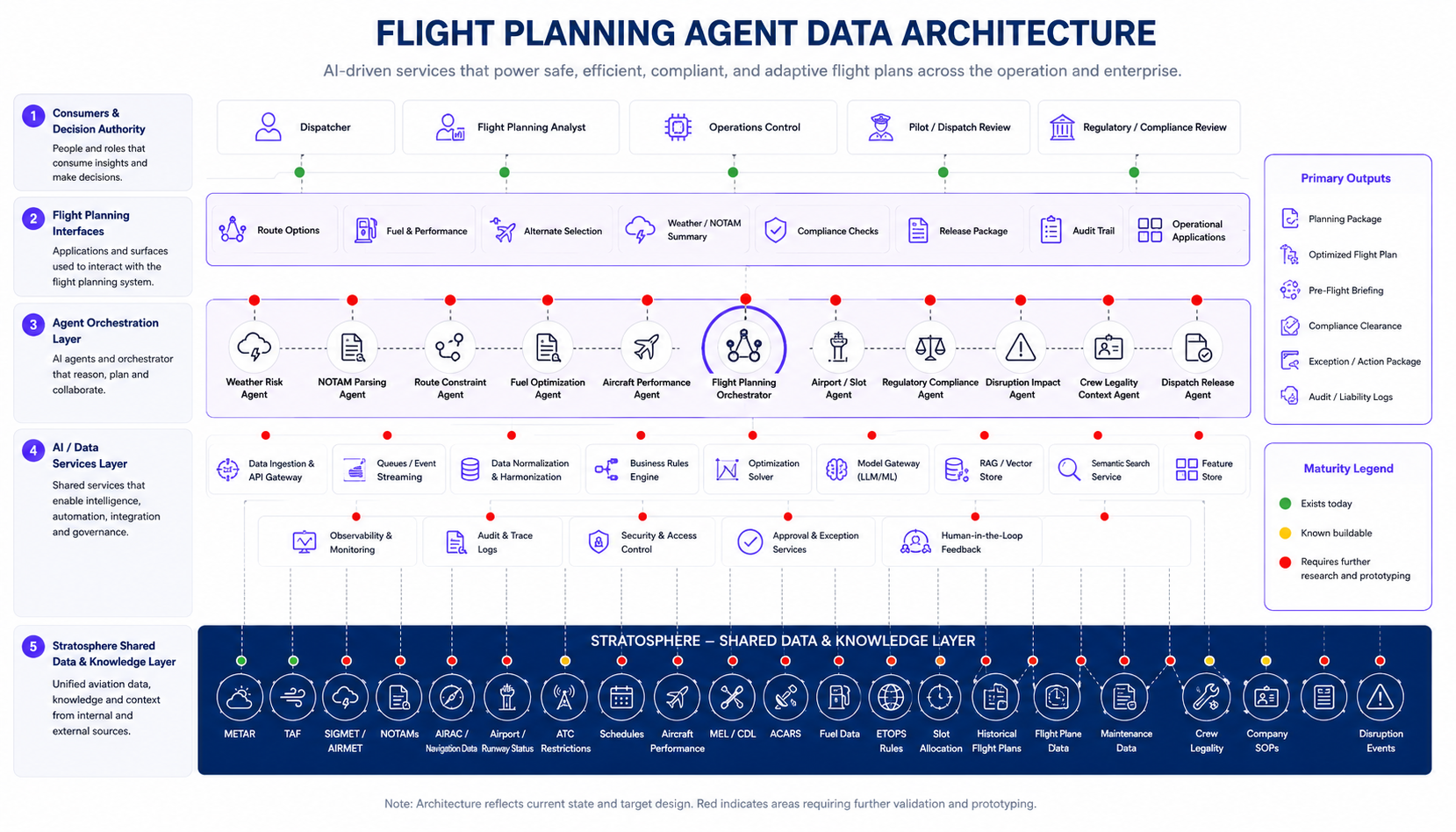
This high-level target architecture frames the agents, services, data sources, decision surfaces, and validation gaps required to support the proposed experience. It does not represent a deployed production architecture.
Aligning the Customer Around a Credible First Step
By the final executive readout, the customer had moved from a broad set of AI ambitions to one shared direction: a reconstructed current-state model, explicit human and agent responsibilities, a prioritized flight-planning workflow, a tangible product experience, and documented requirements for continued development.
The engagement reduced uncertainty and gave customer leaders, product, design, and engineering a common basis for technical validation, usability testing, integration planning, and future investment decisions.
CUSTOMER ALIGNMENT
Leaders moved from scattered and competing ideas to one priority use case, defined operating guardrails, required information, and explicit human decision points.
CREATED AND REVIEWED
A connected current-state model, research synthesis, proposed human-and-agent operating model, and focused product workflow.
DEMONSTRATED
AI engineering assembled a functional agent prototype that ran on a single machine and was presented during the final executive readout.
FURTHER VALIDATION REQUIRED
Frontline usability, customer-data integration, security, compliance, operational performance, and scaled deployment remained future work.
COMMERCIAL CONTRIBUTION
The engagement contributed to a broader multi-year enterprise agreement and partnership to advance the agentic capability. That outcome was shared across product, sales, engineering, and design; my role was leading the research, service design, customer alignment, and product-definition work.
Leadership Takeaway
I operated across research, service design, AI strategy, product definition, customer facilitation, and engineering collaboration—turning an ambiguous emerging-technology discussion into an evidence-based direction with clear human decision boundaries and a credible first step.
Common Questions
I owned the research plan, current-state operating model, customer facilitation, human-and-agent decision framework, prioritized product workflow, interface direction, source-data requirements, and executive narrative. The AI engineering team built the functional agent prototype demonstrated during the final executive readout.
The team had a customer-reviewed current-state model, a proposed human-and-agent operating model, a focused workflow for AI-assisted flight planning, documented engineering requirements, a target architecture, and a functional prototype demonstrated on a single machine.
Operational managers reviewed and corrected the reconstructed current state, and customer stakeholders evaluated the proposed workflow and product direction. Frontline usability testing, live-system integration, security and compliance approval, and scaled operational validation had not yet occurred.
We used a manage-by-exception framework. Agents could handle predictable information gathering, monitoring, preparation, and comparison. Ambiguous, consequential, or low-confidence conditions escalated to a person who retained the authority to inspect, approve, modify, reject, or override the recommendation.
Specific product details, stakeholder names, and implementation details are confidential. This case study focuses on the service design approach, artifact types, and strategic value of the work.
RECOMMENDED NEXT CASE STUDIES →
Continue from future-facing AI strategy into proven product delivery and governed enterprise insight.
© 2026 Harsh Kumar. Some project details have been generalized or redacted to protect confidential information.